Trusted by 6000+ Labs · ISO13485 Certified · Fast Delivery from 3 Factories


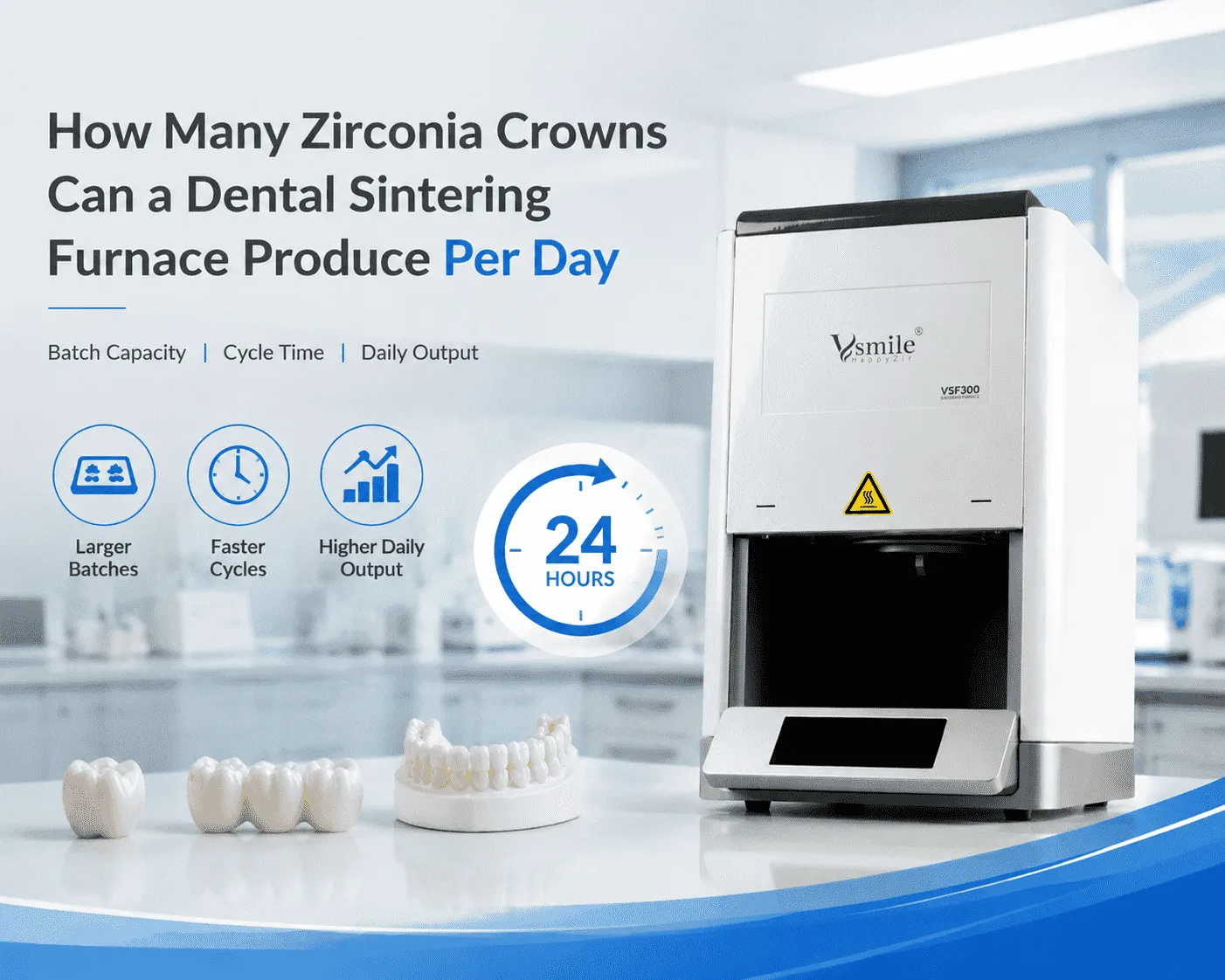
A dental sintering furnace does not have one universal daily output. Production depends on usable crowns per load, the complete start-to-unload cycle time, the number of compatible cycles that fit the operating window, and the percentage of restorations that pass inspection without rework.
For the VSF300 fast sintering furnace, the up-to-60-crown batch reference provides a useful ceiling for single-unit planning. It should not be treated as a guaranteed daily result. Bridges, full-arch frameworks, tray spacing, zirconia programs, cooling, operator handling, and first-pass yield all change the number of finished crowns a laboratory can release each day.
The basic calculation is straightforward: usable crowns per cycle multiplied by completed cycles per day. For a furnace that can load 60 single crowns, two completed cycles create a theoretical ceiling of 120 crowns, while five cycles create a ceiling of 300. Those figures assume every tray position is usable and every restoration passes.
A production manager needs a more conservative number: accepted daily output. This applies a practical load factor and the laboratory's first-pass yield. It also counts only cycles that finish early enough for unloading, inspection, adjustment, staining, glazing, and dispatch within the promised turnaround time.
Daily furnace capacity is often overstated because several different measurements are described as output. Keep the following numbers separate in planning meetings, quotations, and acceptance tests.
Accepted output is the number that should support staffing, delivery promises, furnace return-on-investment calculations, and expansion decisions. A high loading count has limited business value if bridges deform, shades become inconsistent, or the next production stage cannot absorb the batch.
Use this planning formula: accepted crowns per day = nominal crowns per cycle × practical load factor × completed cycles per day × first-pass yield.
The practical load factor converts the advertised or reference count into a realistic mixed-case load. For example, a 60-crown reference capacity used at an 80% practical load factor becomes 48 crowns per cycle. The completed-cycle count must use the entire thermal process, not only the heating stage. First-pass yield should come from actual inspection records rather than a target selected for the spreadsheet.
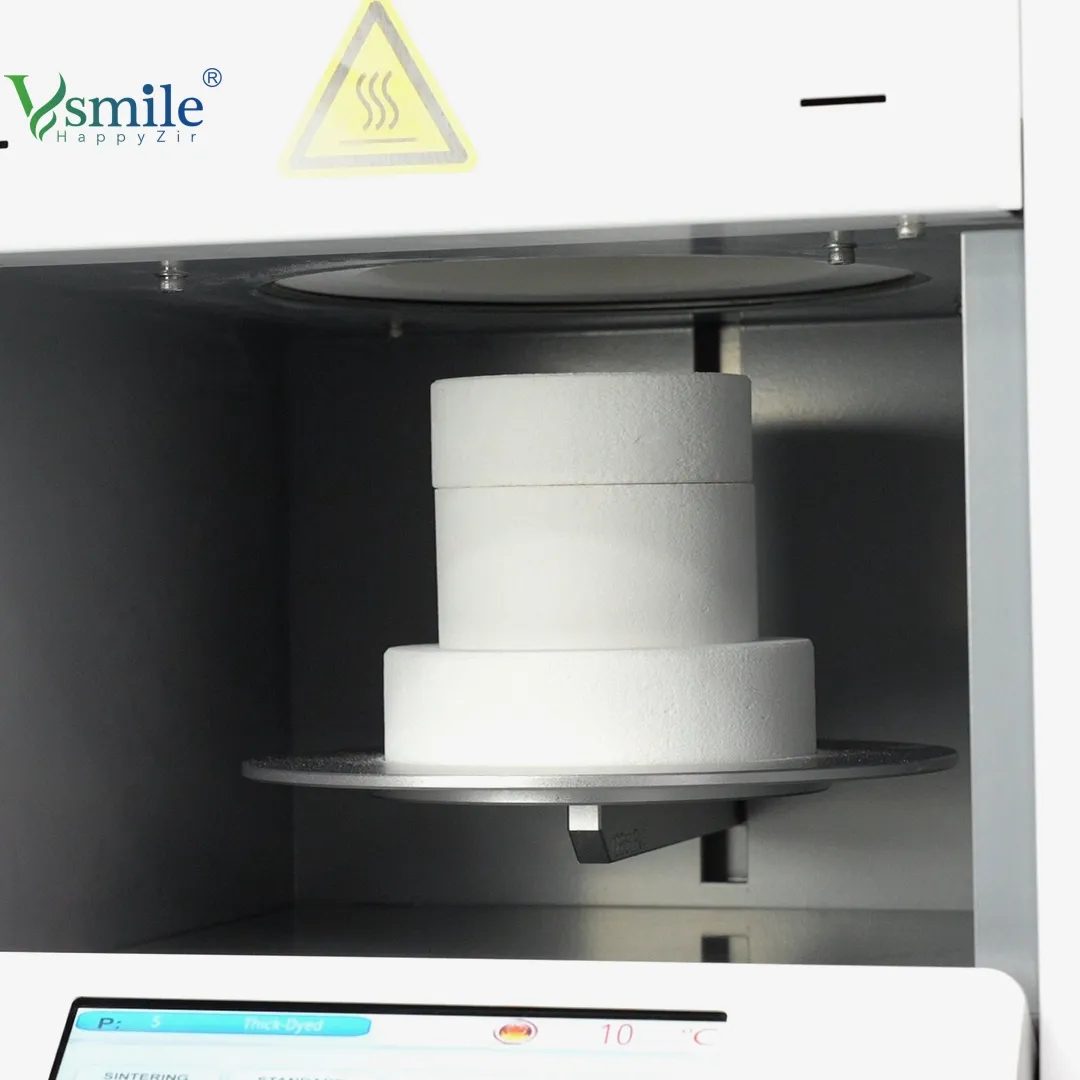
Single posterior crowns can often use tray area more efficiently than long-span bridges or full-arch frameworks. A 90 mm tray that approaches its single-crown reference count may hold far fewer large restorations once connector geometry, support frames, and safe spacing are considered. Count actual tray positions by restoration family rather than using one capacity figure for every case.
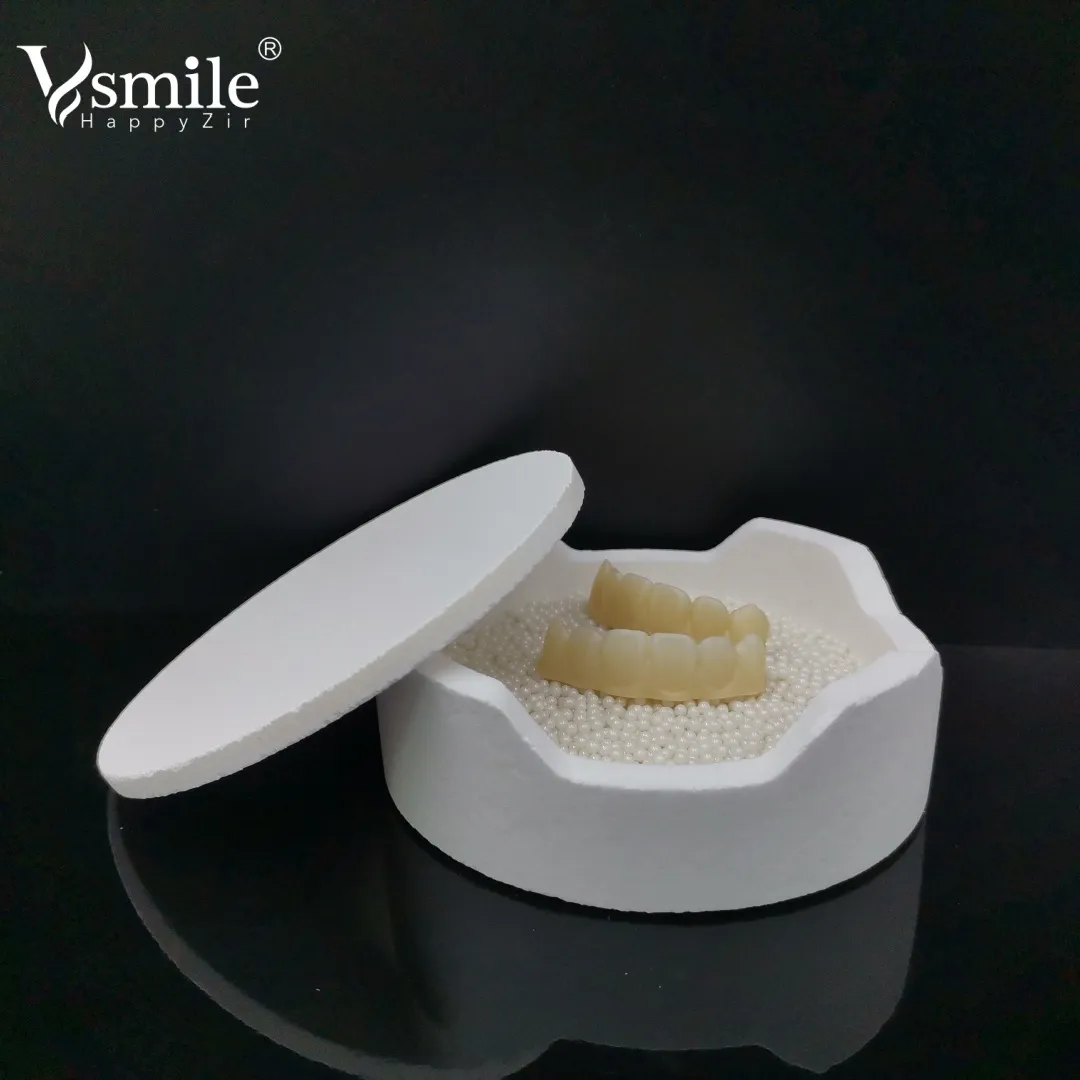
Tray design also affects the calculation. Open and closed trays, beads, covers, and fast-sintering trays have different thermal behavior and handling requirements. The approved loading method should match the zirconia manufacturer's schedule and the furnace program. Vsmile's guide to choosing the right sintering tray explains why tray construction and heating rate should be considered together.
Create a photographed loading standard for single crowns, three-unit bridges, longer bridges, and full-arch cases. Each standard should record the maximum approved count, tray level, spacing, support method, and compatible program. This turns capacity into an operator-controlled process rather than an estimate made at the end of a busy shift.
Cycle time begins when the furnace is available for loading and ends when the next load can be handled safely. Include loading, program selection, heating, holds, controlled cooling, unloading, tray recovery, and any required inspection or cleaning between cycles. A 60-minute thermal program does not automatically create eight cycles in an eight-hour shift.
Fast sintering is material- and indication-specific. The zirconia manufacturer must approve the ramp, peak temperature, hold, cooling profile, restoration geometry, and load arrangement. A schedule validated for single crowns should not be transferred to a thick bridge or full-arch framework without evidence. For full-arch work, the sintering support frame and placement method are part of the capacity and deformation-control plan.
Furnaces rarely run at full nominal loading all day. Cases arrive in different shades, material families, restoration types, and due-time groups. Some cannot share a program, while urgent work may require a partially filled cycle. Measure the average load factor separately for routine batches and priority cases.
First-pass yield protects the calculation from hidden remake capacity. If 100 crowns are sintered but five require replacement because of deformation, shade, contamination, or handling damage, the first-pass yield is 95%. Track the reason for each loss. Furnace-related variation, material preparation, drying, coloring, nesting, support design, and inspection must be distinguished before corrective action is assigned.
Illustrative planning scenarios based on a 60-crown nominal batch reference. Replace every assumption with validated laboratory data.
| Planning scenario | Calculation | Estimated accepted crowns |
|---|---|---|
| Two-cycle mixed workload | 40 usable × 2 cycles × 95% yield | 76 per day |
| Four-cycle compatible workload | 48 usable × 4 cycles × 97% yield | 186 per day |
| Six validated rapid cycles | 54 usable × 6 cycles × 98% yield | 318 per day |
The table uses the VSF300 reference capacity of up to 60 crowns per cycle, then applies different loading and yield assumptions. These are calculation examples, not rated daily-output claims. The six-cycle scenario is relevant only when the zirconia, restoration type, tray arrangement, complete cycle time, staffing, and operating window have all been validated for that schedule.
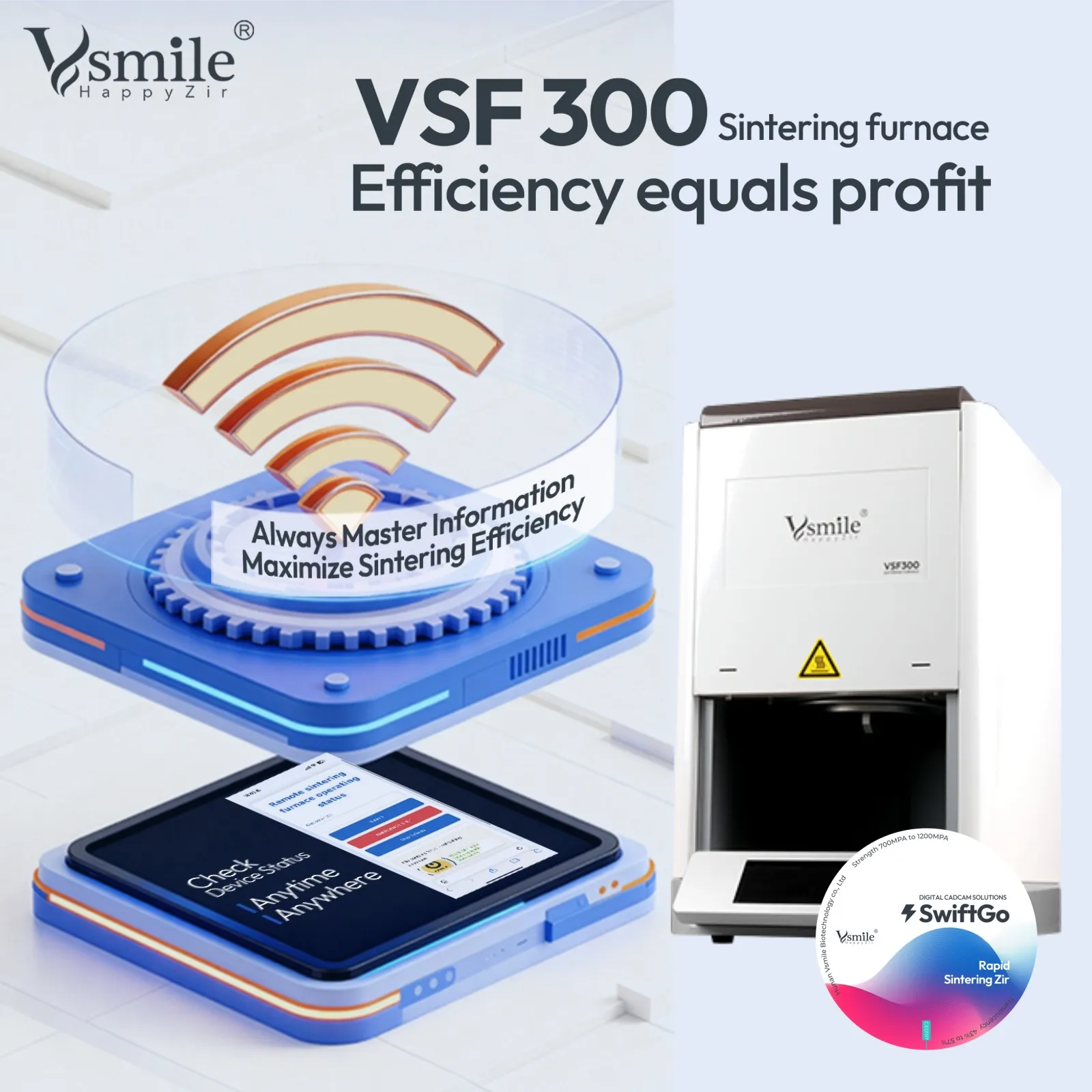
Within Vsmile's sintering furnace range theVSF300 fast sintering furnace combines a 90 mm tray format and dual-layer loading with a heating rate of up to 200 °C per minute, automatic fast cooling, and operation without preheating. These functions can shorten the time between compatible loads. Twelve programmable segments and 50 built-in or custom programs help preserve material-specific ramp, hold, and cooling requirements, while WiFi monitoring on the WiFi version can support scheduling by showing cycle status and remaining time.
The most useful VSF300 capacity number is therefore not 60 multiplied by the number of hours in a day. It is the average accepted output recorded for each validated material and restoration family under the laboratory's actual staffing and finishing capacity.
More furnace cycles do not guarantee more delivered crowns. Milling, drying after coloring, tray preparation, unloading, inspection, adjustment, staining, glazing, and final quality control must be able to process the same volume. If a 60-crown batch reaches finishing at once, the laboratory may simply move the queue from the furnace to the bench.
Map hourly capacity for each stage and identify the lowest sustainable rate. It may be more effective to improve nesting discipline, drying capacity, shift timing, program grouping, or finishing staffing before adding another rapid cycle. WiFi status visibility can help coordination, but production control still requires clear ownership and standard work.
Before using a daily-output figure for quotations or investment planning, measure five representative production days. Record every load by material, shade group, restoration type, tray arrangement, program, start time, unload time, and accepted count. Include urgent and partially filled cycles instead of testing only ideal full trays.
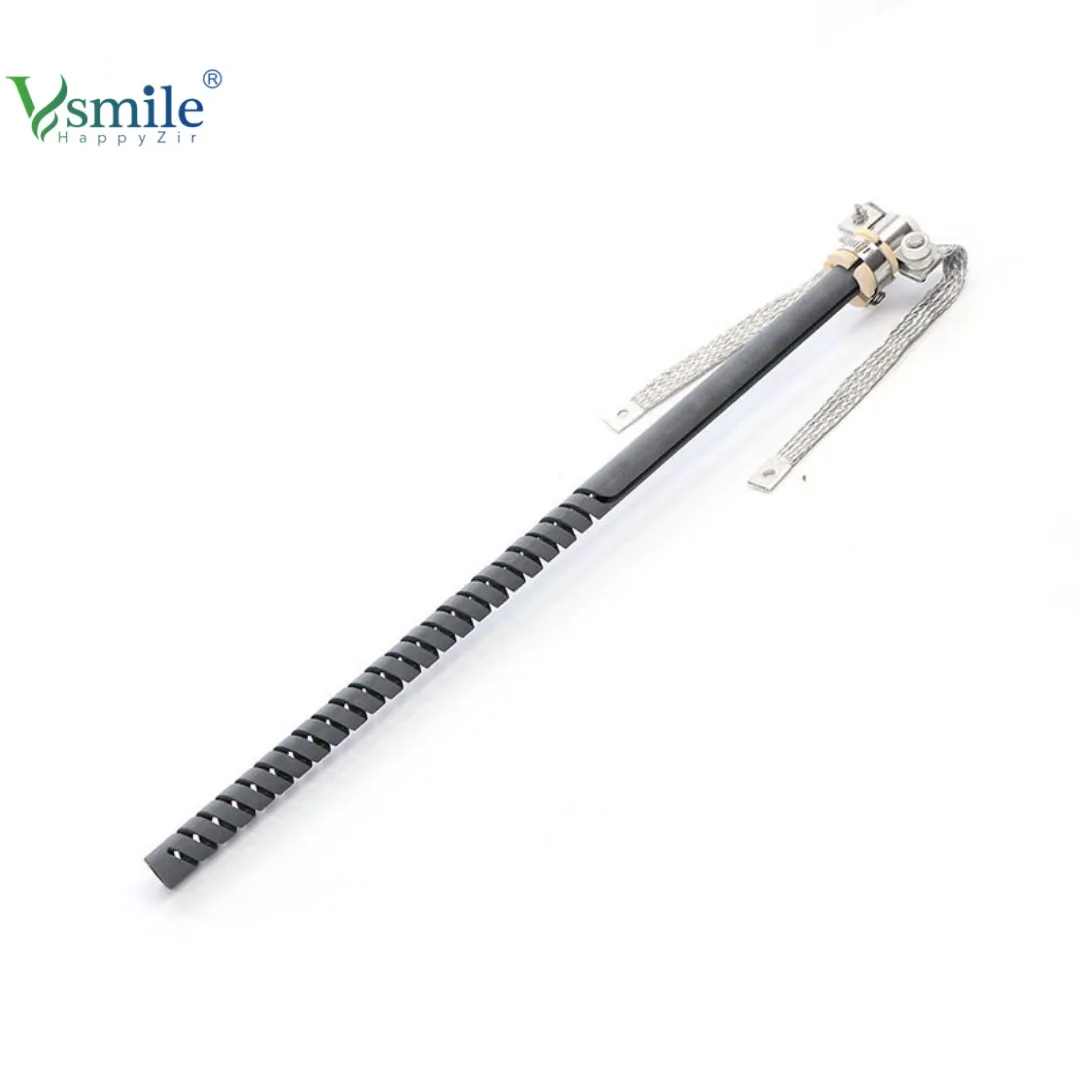
Review average output, the lowest day, peak-day backlog, first-pass yield, overtime, and any interrupted cycles. Also record heating-element, thermocouple, tray, and calibration checks that affect reliability. Vsmile's after-sales service and training resources can be included in the implementation plan when defining operator training, maintenance responsibilities, and technical escalation.
Consider a second furnace when validated demand repeatedly exceeds sustainable accepted output, not after one unusually busy day. Expansion may also be justified when one furnace creates unacceptable downtime risk, incompatible material programs compete for the same schedule, or urgent cases regularly disrupt large batches.
Use at least four weeks of production data to compare demand, accepted output, overtime, outsourcing, remake causes, and maintenance interruptions. The decision should account for redundancy and schedule flexibility as well as additional crown capacity.
A dental sintering furnace can produce only as many zirconia crowns per day as the complete workflow can load, sinter, inspect, finish, and release. Start with usable crowns per cycle, multiply by completed compatible cycles, apply first-pass yield, and confirm the result over representative production days.
Calculate Your VSF300 Daily Capacity — share your case mix, zirconia programs, tray arrangements, shift hours, and target turnaround to build a configuration-specific capacity and validation plan with Vsmile.
Up to 60 crowns is a batch reference for suitable single-unit loading. Actual usable capacity depends on crown size, spacing, tray levels, beads or covers, material program, and whether bridges or full-arch cases share the chamber.
Divide the available operating window by the complete start-to-unload time, then allow for loading, tray handling, inspection, and interruptions. Count only cycles validated for the zirconia and restoration type being processed.
Yes. Use first-pass yield to convert sintered units into accepted units. Remakes consume milling, furnace, material, and finishing capacity, so excluding them overstates the number the laboratory can deliver.
No. For full-arch and long-span work, track frameworks per load, usable tray geometry, support-frame requirements, complete cycle time, deformation checks, and accepted frameworks per day.

Vsmile is pleased to announce its participation in the 3rd Algerian Dental Expo (ADEX 2026), taking place from November 11 to 14, 2026, at the Palais des Expositions (SAFEX) in Algiers, Algeria.
At this year's exhibition, Vsmile will join its local distribution partner, WHITE TRADER, at Pavillon A. Together, the teams will connect with dental professionals and showcase dental materials, CAD/CAM solutions and practical applications for modern dental laboratory workflows.
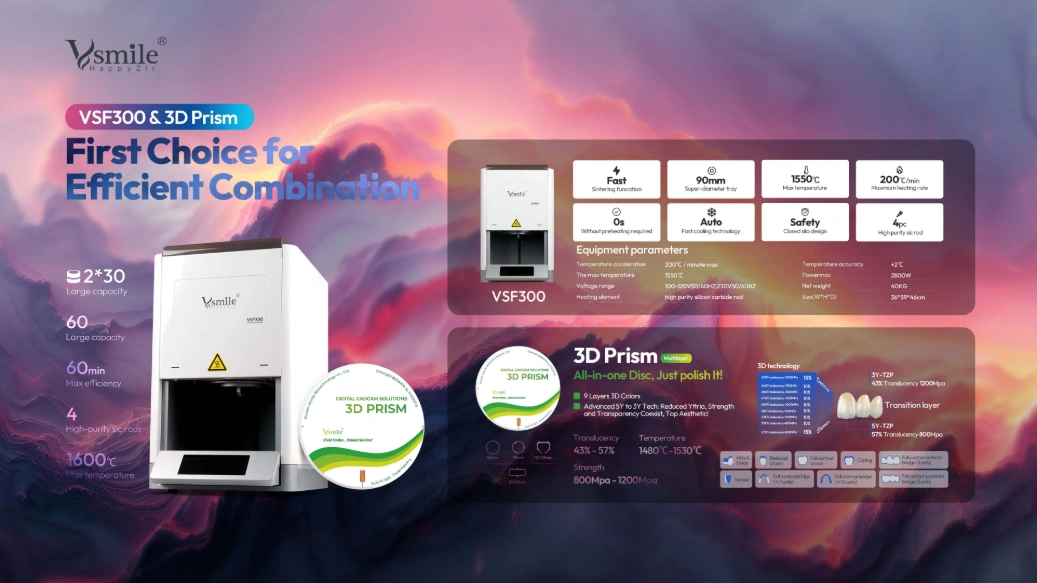
This bundle combines the powerful VSF300 fast sintering furnace with 4 pcs of 3D Prism multilayer zirconia blocks, delivering speed, capacity, and consistent esthetics in one package.

Passive fit failure is rarely caused by a single factor. Instead, it is the result of error stacking across the entire digital and manufacturing workflow.

Fracture and microcracks are among the most critical failure modes in All-on-X (AOX) zirconia restorations.
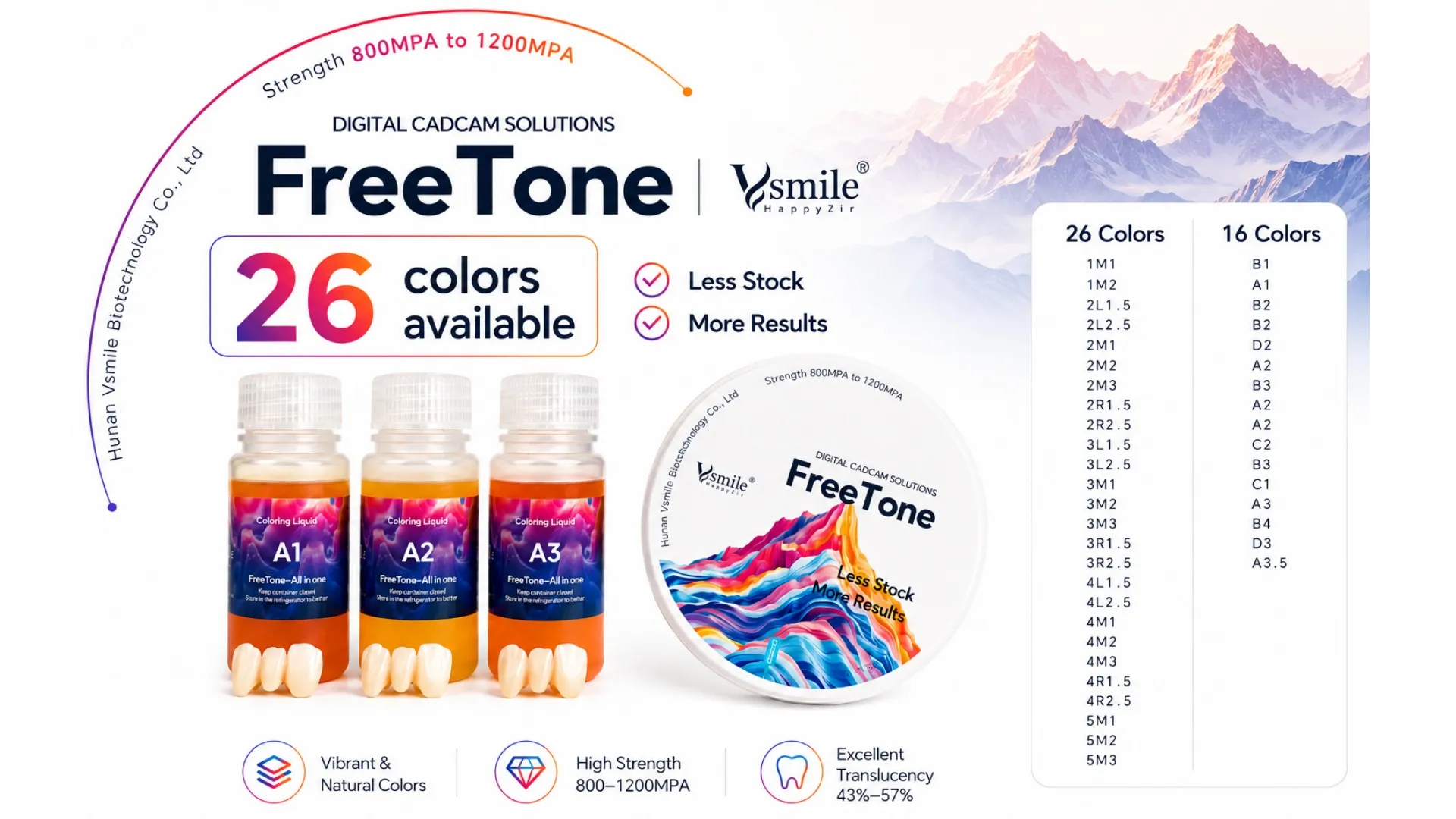
Whether you're crafting A1 or D4, FreeTone White Zirconia Disc gives you total shade control with just one SKU — streamlining inventory and increasing productivity.

Voices from Vsmile Global Partners — Stories of Trust, Growth, and Smiles We Create Together.
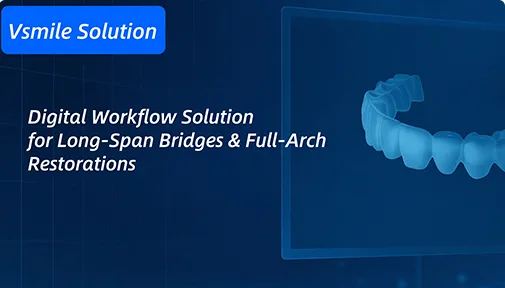
Long-span and full-arch restorations represent some of the most complex and failure-prone procedures in digital dentistry. Challenges include connector fractures, marginal misfits, sintering deformation, and low clinical longevity. Labs and clinics face a high rate of remakes, increased cost, and pressure to maintain quality under tight delivery deadlines.
2025.5.22

Vsmile offers a complete, validated digital workflow — from scanning to final zirconia bridge — that helps labs and clinics deliver life-changing smiles faster, with greater confidence and repeatable quality.


Tel: +86-731-85682958
Fax: +86-731-85682958
WhatsApp: +8615084896166/+8618569525651
Email: [email protected]
Address:
Room 1202-1203, Building A4,Huanchuang Corporate Park,No.2450, Yuelu West Avenue, Changsha Hi-tech Development District, Changsha, China.



























 EN
 fr
 ru
 nl
 uk
 fil
 lo
 ko
 it
 es
 el
 pt
 de
 th
 be
 sq
 tr
 ar
 vi
 pl