Trusted by 6000+ Labs · ISO13485 Certified · Fast Delivery from 3 Factories



A dental sintering furnace should be selected around the laboratory's real case mix, peak workload, zirconia portfolio, and delivery promises. A furnace with an impressive maximum temperature or rapid heating rate may still create a bottleneck if its usable tray capacity is too small, its validated programs do not match your materials, or maintenance support is slow.
Vsmile's sintering furnace range covers different throughput and workflow needs. This guide explains how to compare dental sintering furnaces by capacity, speed, and reliability, then turns those criteria into a practical purchase decision. It also shows where the VSF300 fast sintering furnace may fit a lab that needs fast cycles and larger batch handling — without treating headline specifications as a substitute for workflow validation.
Begin with production records, not a catalog. Count zirconia units by day and by week, then separate routine volume from urgent cases and seasonal peaks. A lab averaging 25 units per day may appear to need modest capacity, but a concentrated evening load can require a much larger batch than the daily average suggests.
Case mix matters just as much as unit count. Single crowns nest efficiently, while long-span bridges, full-arch frameworks, support structures, and covered trays consume more chamber area. Record how many trays you run, the restoration types on each tray, and how often a cycle leaves unused space because cases cannot share the same program.
Map the entire workflow as well. Milling output, drying, coloring, nesting, sintering, finishing, staining, glazing, inspection, and staffing must remain balanced. Before shortlisting a furnace, record:
Capacity is the number of restorations you can safely process under a validated loading pattern. Manufacturer crown counts are useful reference points, but actual output changes with tray diameter, number of tray levels, restoration geometry, spacing, support frames, beads, lids, and the selected thermal profile.
Use a peak-load calculation: required cycle capacity equals peak units due in the same production window divided by the number of validated cycles available before finishing must begin. Add a buffer for remakes and urgent work.
For full-arch work, compare chamber geometry rather than crown count. Ask the supplier to demonstrate your largest typical framework with the intended support design, tray, and cover. The loading test should show clearance, stable placement, and temperature-program compatibility — not simply whether the restoration fits through the opening.
Heating rate alone does not equal turnaround time. Compare the full cycle from a safe start condition to a safe unloading temperature, including holds, cooling, and any preparation between batches. A high ramp rate has limited value when cooling remains long or the material requires a conservative schedule.
Fast sintering must be validated for each zirconia material and indication. Follow the zirconia manufacturer's approved temperature, ramp, hold, cooling, and loading guidance. Do not assume that a program suitable for a single posterior crown is appropriate for a thick bridge or full-arch framework. Geometry, mass, shading liquids, and tray configuration can change thermal behavior.
A useful comparison asks how many completed, accepted units the lab can release per shift. Run sample cycles with representative restorations and evaluate fit, shade, translucency, surface condition, deformation, and repeatability. Speed is valuable only when the result passes the same quality checks as the lab's established process.
Reliability covers temperature control, heating uniformity, program repeatability, component life, safety functions, service response, and recovery after a fault. Ask how the furnace detects thermocouple problems, over-temperature conditions, power interruptions, and abnormal heating. Remote monitoring can improve visibility, but it does not replace documented alarm handling or trained supervision.
Maintenance planning should include heating elements, thermocouples, insulation, trays, beads, door or lift mechanisms, cooling components, and calibration. Request replacement intervals, prices, lead times, installation instructions, and the work that may be performed by laboratory staff. A low purchase price can become expensive when a critical part is unavailable during a busy week.
Before acceptance, run repeated cycles with a standard load and review the recorded temperature behavior. Establish a baseline for cycle duration and finished results so later drift is easier to identify.
A laboratory using several zirconia families needs more than a large program count. Review how programs are created, named, locked, backed up, and restored. Operators should be able to identify the correct schedule without interpreting vague labels, while authorized staff should control revisions.
Check the number of programmable segments against the most demanding approved schedule you expect to use. Also confirm whether the controller records cycle status, alarms, interruptions, or completion time.
Material compatibility should be demonstrated rather than described as universal. Build a qualification matrix covering zirconia brand, product line, shade treatment, restoration type, tray configuration, program revision, and acceptance result. Update it whenever material, furnace software, heating elements, or loading practice changes.
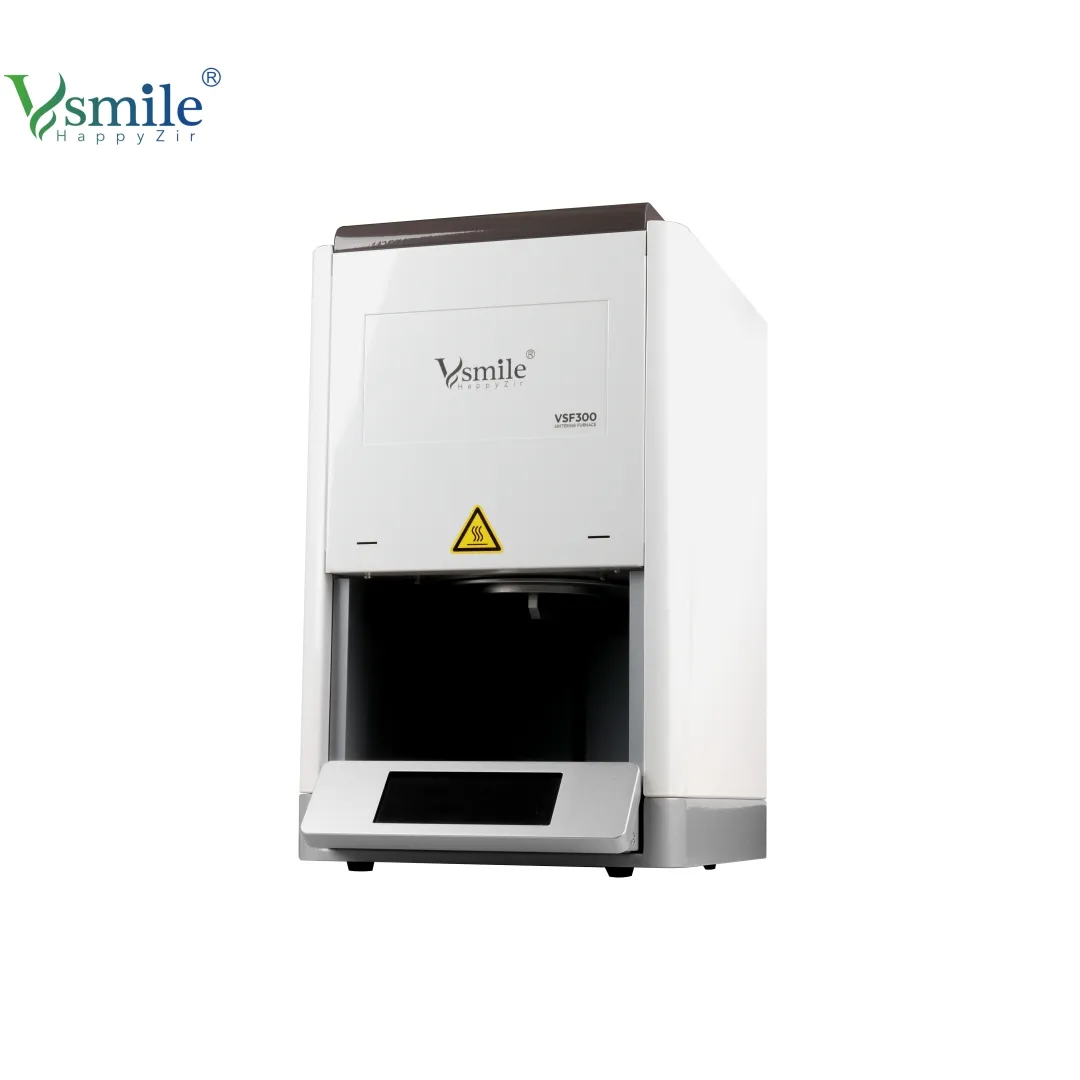
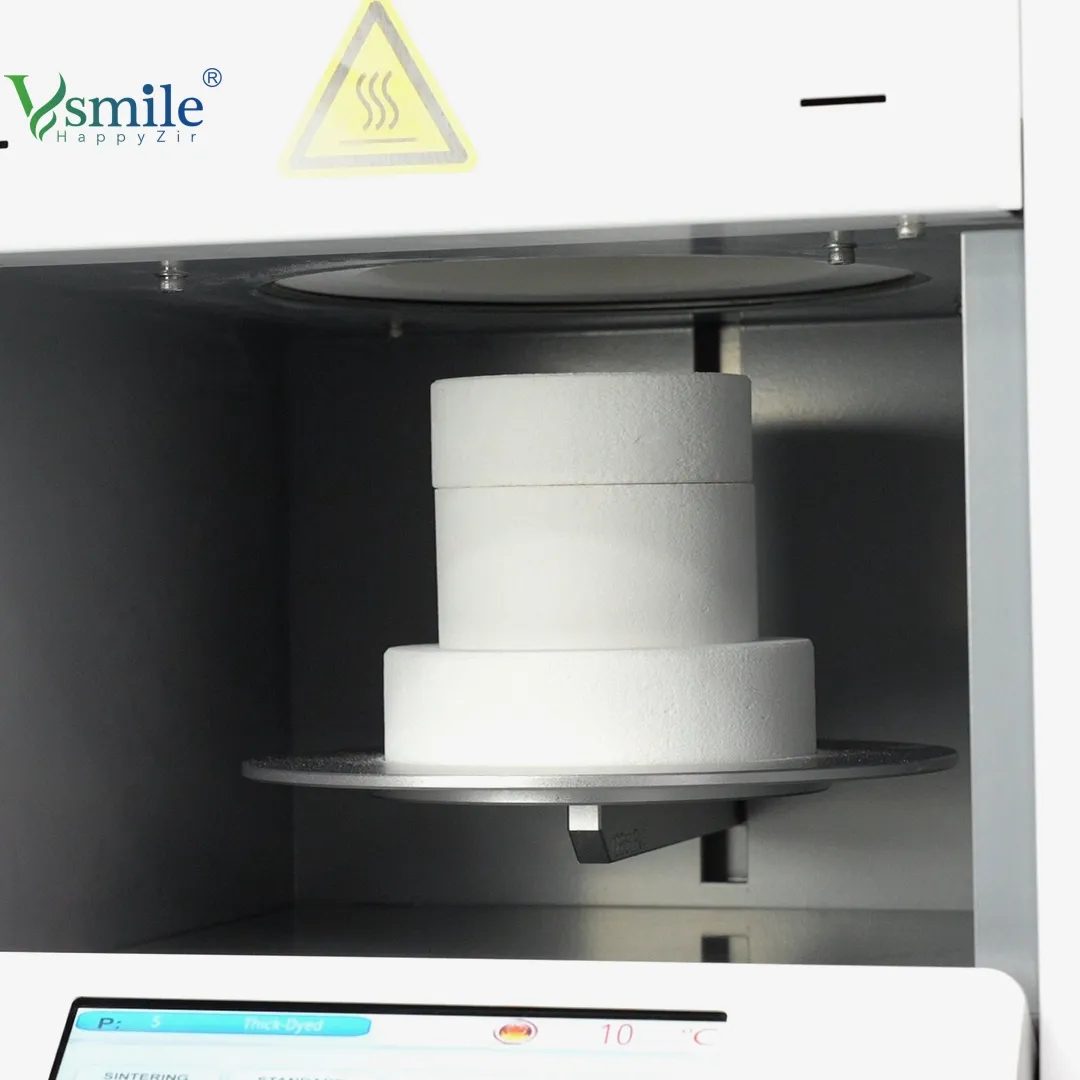
In Vsmile's sintering furnace range, the VSF300 fast sintering furnace is designed for laboratories that need to combine planned batch production with shorter-turnaround cases. Its 90 mm tray format, dual-layer loading, and stated capacity of up to 60 crowns per cycle can reduce the number of runs required during a concentrated production window. The practical capacity for bridges and full-arch work should be determined by the actual tray layout, restoration geometry, spacing, and approved material program.
A heating rate of up to 200 °C per minute, automatic fast cooling, and operation without preheating support rapid workflows when the selected zirconia is approved for the corresponding schedule. Twelve programmable segments and 50 built-in or custom programs give the laboratory room to reproduce different ramp, hold, and cooling requirements instead of forcing every material into one generic fast cycle. The WiFi version also allows staff to monitor cycle status and remaining time while coordinating milling, finishing, and delivery tasks.
Qualification should reflect the work the furnace will perform after installation. Run representative single-unit, bridge, and full-arch loads with the intended trays and support structures, then record the approved program, loading pattern, cycle duration, fit, shade, and deformation checks. This creates a controlled operating baseline for both routine batches and urgent cases while giving operators clear limits for each zirconia workflow.
Tray choice belongs in furnace qualification. Open and closed trays, dense trays, fast-sintering trays, beads, and support structures respond differently to rapid heating and cooling. Follow the approved combination for the furnace program and material. Vsmile's guide to choosing a sintering tray notes that tray construction and heating rate affect thermal-shock risk, so a tray should not be selected only by diameter.
Confirm utilities before delivery: voltage and frequency, maximum power, circuit protection, ventilation, heat clearance, bench strength, and service access. Document startup, shutdown, emergency stop, hot-zone handling, and response to a failed cycle.
For long-span and full-arch restorations, include support design and placement in the standard operating procedure. Furnace capability cannot compensate for inconsistent CAD support, nesting, sintering beads, or handling. The final result remains a controlled combination of design, material, drying, loading, thermal processing, and inspection.
| Decision factor | What to verify | Why it changes the purchase |
|---|---|---|
| Usable capacity | Tray diameter, levels, spacing, and representative load | Determines cycles per shift and peak-load buffer |
| Complete cycle time | Start-to-unload time for each approved material program | Predicts real turnaround rather than headline ramp speed |
| Program control | Editable segments, saved programs, permissions, and logs | Reduces operator variation and supports multiple zirconia systems |
| Temperature performance | Control tolerance, uniformity evidence, and calibration method | Supports repeatability across the usable chamber |
| Serviceability | Parts availability, response time, warranty, and training | Limits downtime and unplanned outsourcing |
| Site fit | Voltage, power, ventilation, clearances, dimensions, and weight | Prevents installation delays and unsafe placement |
Choose the furnace that delivers the required number of accepted restorations within your real production window, not the model with the strongest single headline figure. Usable tray capacity, validated cycle time, program control, maintenance access, and service response must work together for the laboratory's material mix and case schedule.
For laboratories evaluating the VSF300, provide Vsmile with your zirconia brands, restoration mix, peak batch size, urgent-case target, tray requirements, and electrical supply. A representative-load review, supported by Vsmile's after-sales service and training resources, can then define the appropriate programs, accessories, operator training, and acceptance checks before installation.
The right sintering furnace is decided by verified accepted output, not by a single maximum specification. Start from real production records, size the furnace against peak compatible load and complete cycle time, confirm program control and serviceability, then validate the specific zirconia workflows the laboratory actually runs. A representative-load qualification turns supplier claims into a documented operating baseline the team can trust.
Calculate capacity from the largest group of compatible cases that must finish in the same production window. Include tray spacing, bridges, full-arch frameworks, support structures, urgent cases, and a buffer for remakes. Nominal crown count alone is not enough.
No. Compare complete start-to-unload time and verify the schedule for each zirconia material and indication. A faster ramp is useful only when fit, shade, appearance, deformation, and repeatability meet the lab's acceptance criteria.
Test representative loads over repeated cycles, program control, temperature behavior, alarms, cooling, monitoring, operator workflow, and finished restorations. Confirm installation, training, spare parts, warranty, and service response in writing.
Its fast and standard modes, 90 mm tray format, dual-layer loading, and rapid-cycle features may suit both needs. The lab should still validate its specific model, restoration geometry, tray arrangement, and delivery schedule before relying on a stated capacity or minimum cycle time.
For full-arch frameworks, prioritize chamber geometry and clearance, program flexibility for long and conservative curves, temperature-uniformity evidence, and support for the intended tray and support-frame design — not only maximum heating rate or crown count.
Contact Vsmile for a customized quotation. Share your zirconia brands, restoration mix, peak batch size, urgent-case target, tray requirements, and electrical supply so the recommendation can be matched to your validated workflows and delivery promises.

Vsmile is pleased to announce its participation in the 3rd Algerian Dental Expo (ADEX 2026), taking place from November 11 to 14, 2026, at the Palais des Expositions (SAFEX) in Algiers, Algeria.
At this year's exhibition, Vsmile will join its local distribution partner, WHITE TRADER, at Pavillon A. Together, the teams will connect with dental professionals and showcase dental materials, CAD/CAM solutions and practical applications for modern dental laboratory workflows.

This bundle combines the powerful VSF300 fast sintering furnace with 4 pcs of 3D Prism multilayer zirconia blocks, delivering speed, capacity, and consistent esthetics in one package.

Passive fit failure is rarely caused by a single factor. Instead, it is the result of error stacking across the entire digital and manufacturing workflow.

Fracture and microcracks are among the most critical failure modes in All-on-X (AOX) zirconia restorations.

Whether you're crafting A1 or D4, FreeTone White Zirconia Disc gives you total shade control with just one SKU — streamlining inventory and increasing productivity.

Voices from Vsmile Global Partners — Stories of Trust, Growth, and Smiles We Create Together.

Long-span and full-arch restorations represent some of the most complex and failure-prone procedures in digital dentistry. Challenges include connector fractures, marginal misfits, sintering deformation, and low clinical longevity. Labs and clinics face a high rate of remakes, increased cost, and pressure to maintain quality under tight delivery deadlines.
2025.5.22

Vsmile offers a complete, validated digital workflow — from scanning to final zirconia bridge — that helps labs and clinics deliver life-changing smiles faster, with greater confidence and repeatable quality.


Tel: +86-731-85682958
Fax: +86-731-85682958
WhatsApp: +8615084896166/+8618569525651
Email: [email protected]
Address:
Room 1202-1203, Building A4,Huanchuang Corporate Park,No.2450, Yuelu West Avenue, Changsha Hi-tech Development District, Changsha, China.




















































 EN
 fr
 ru
 nl
 uk
 fil
 lo
 ko
 it
 es
 el
 pt
 de
 th
 be
 sq
 tr
 ar
 vi
 pl