Trusted by 6000+ Labs · ISO13485 Certified · Fast Delivery from 3 Factories


Zirconia has completely transformed modern dentistry—especially for dental labs, CAD-CAM centers, prosthodontic clinics, implant clinics, and dental technicians. But with all the new materials available today, one question keeps coming up:
If you’ve ever wondered which zirconia offers the best strength, translucency, or esthetics—this complete guide is for you.
We’ll break everything down step-by-step, using simple language and real-world lab experience.
Choosing the correct Zirconia Grade is essential for:
Different zirconia grades are designed for different clinical needs. What works beautifully for an anterior crown may fail in a full-arch implant bridge.
By the end of this guide, you’ll know exactly:
Zirconia used in dentistry is stabilized with yttria (Y₂O₃). The percentage of yttria determines the material’s:
The three most common grades are:
| Zirconia Grade | Y-TZP Composition | Key Feature |
|---|---|---|
| 3Y | 3 mol% yttria | Highest strength |
| 4Y | 4 mol% yttria | Balanced strength & translucency |
| 5Y | 5 mol% yttria | Highest translucency |
Each grade offers a different balance between Zirconia Strength and Zirconia Translucency.
Dental zirconia contains two main crystal phases:
The more cubic phase → The more translucent the zirconia becomes. But cubic zirconia is not as strong as tetragonal zirconia.
Simple relationship:
3Y (3 mol% yttria) is the original dental zirconia. If you need unmatched strength and toughness, nothing beats 3Y.
Low translucency, best used where esthetics are less critical.
Extremely high translucency, similar to natural enamel.
600–800 MPa (similar to lithium disilicate). Not suitable for long bridges.
900–1100 MPa
More translucent than 3Y, less than 5Y.
| Feature | 3Y | 4Y | 5Y |
|---|---|---|---|
| Strength | ★★★★★ | ★★★★ | ★★★ |
| Translucency | ★★ | ★★★★ | ★★★★★ |
| Bridges | Excellent | Good | Poor |
| Anterior Esthetics | Fair | Good | Excellent |
| Posterior Strength | Excellent | Good | Fair |
| Implant Restorations | Excellent | Good | Not recommended |
| Full-Arch | Best | Good | No |
| Veneers | No | Yes | Excellent |
| Cost | $ | $$ | $$–$$$ |
Many premium multilayer zirconia blocks combine multiple grades.
Cervical zone → 3Y
Middle zone → 4Y
Incisal zone → 5Y
3Y zirconia is the strongest and is best for bridges, full arches, and implant cases.
5Y zirconia is the most translucent and perfect for front teeth.
Yes. It offers the perfect balance of strength & translucency.
Because mixing 3Y/4Y/5Y produces a natural gradient and optimizes performance.
No. It lacks long-term strength.
5Y zirconia.
For anterior esthetics → 5Y
For everyday crowns & bridges → 4Y
For long-span & full arches → 3Y
For premium esthetics → multilayer (3Y/4Y/5Y)
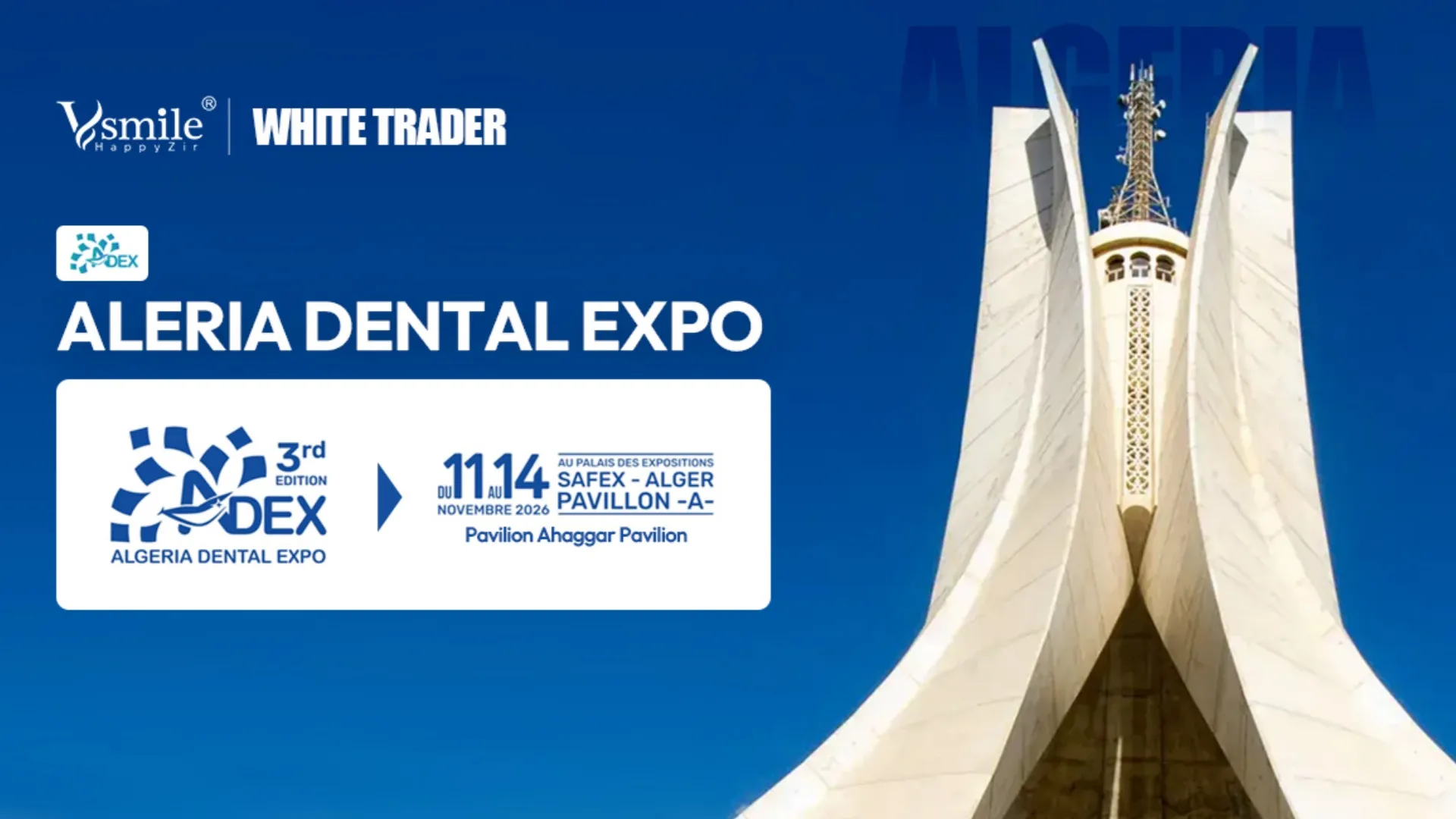
Vsmile is pleased to announce its participation in the 3rd Algerian Dental Expo (ADEX 2026), taking place from November 11 to 14, 2026, at the Palais des Expositions (SAFEX) in Algiers, Algeria.
At this year's exhibition, Vsmile will join its local distribution partner, WHITE TRADER, at Pavillon A. Together, the teams will connect with dental professionals and showcase dental materials, CAD/CAM solutions and practical applications for modern dental laboratory workflows.
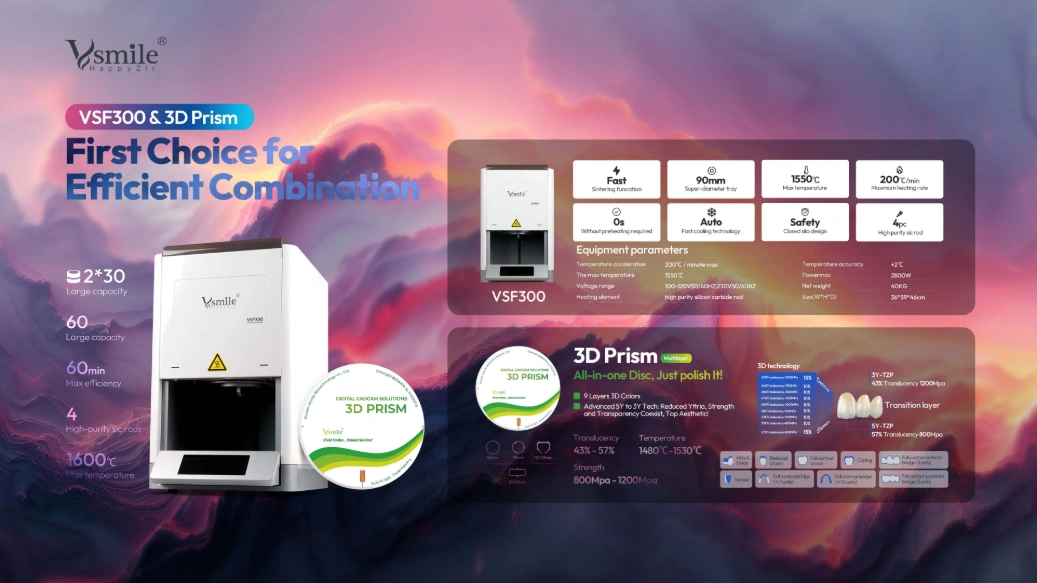
This bundle combines the powerful VSF300 fast sintering furnace with 4 pcs of 3D Prism multilayer zirconia blocks, delivering speed, capacity, and consistent esthetics in one package.
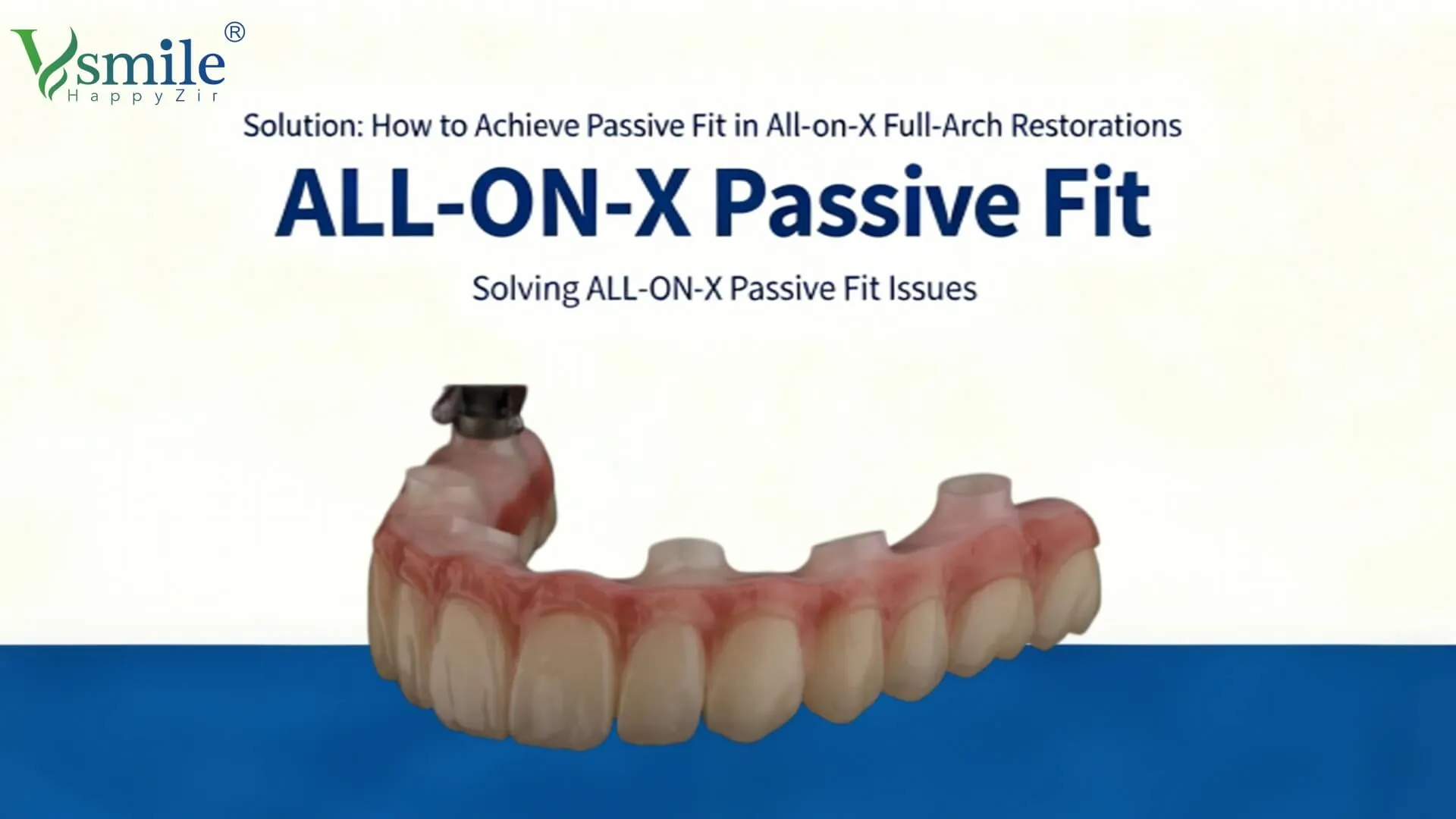
Passive fit failure is rarely caused by a single factor. Instead, it is the result of error stacking across the entire digital and manufacturing workflow.
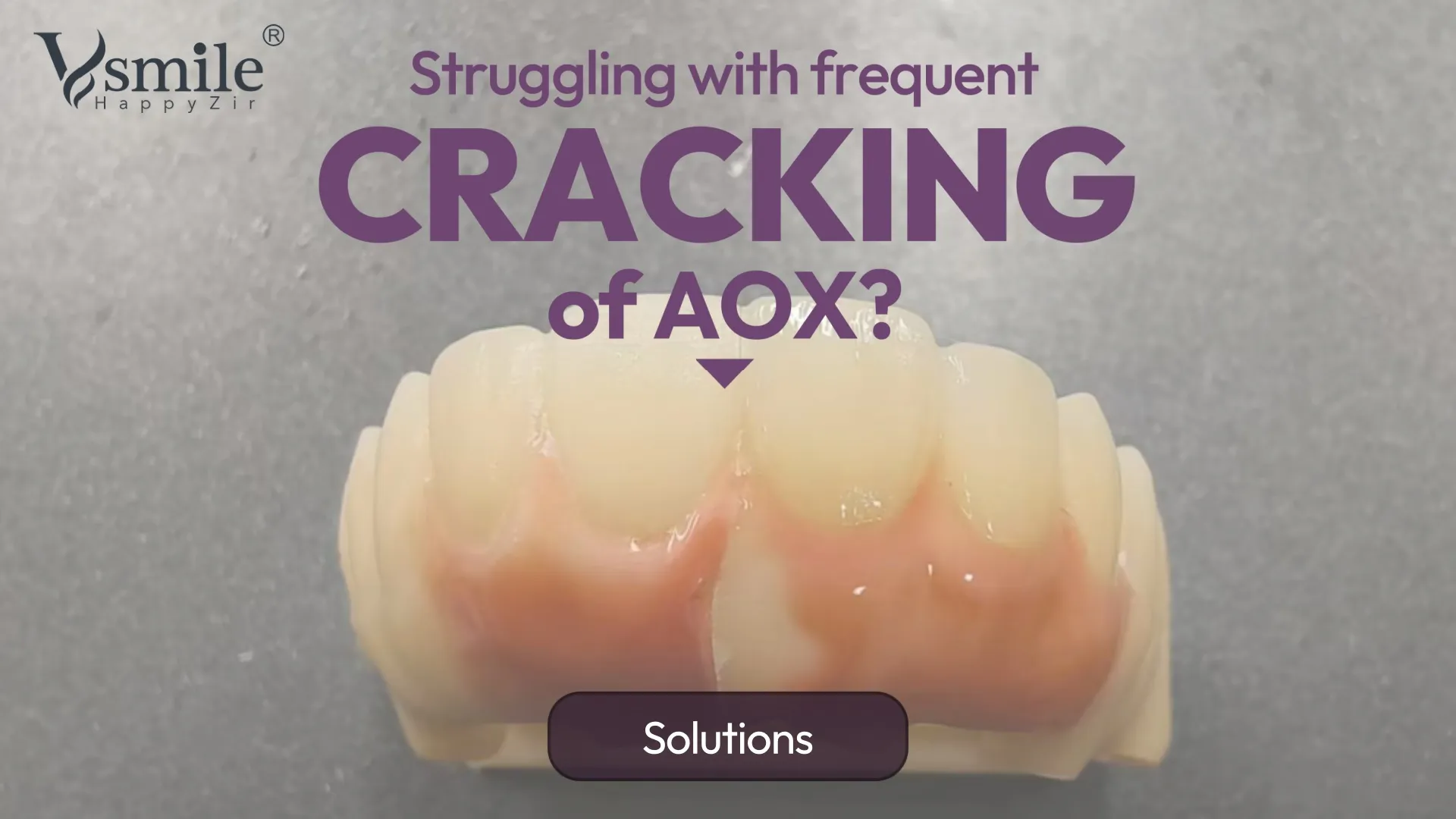
Fracture and microcracks are among the most critical failure modes in All-on-X (AOX) zirconia restorations.
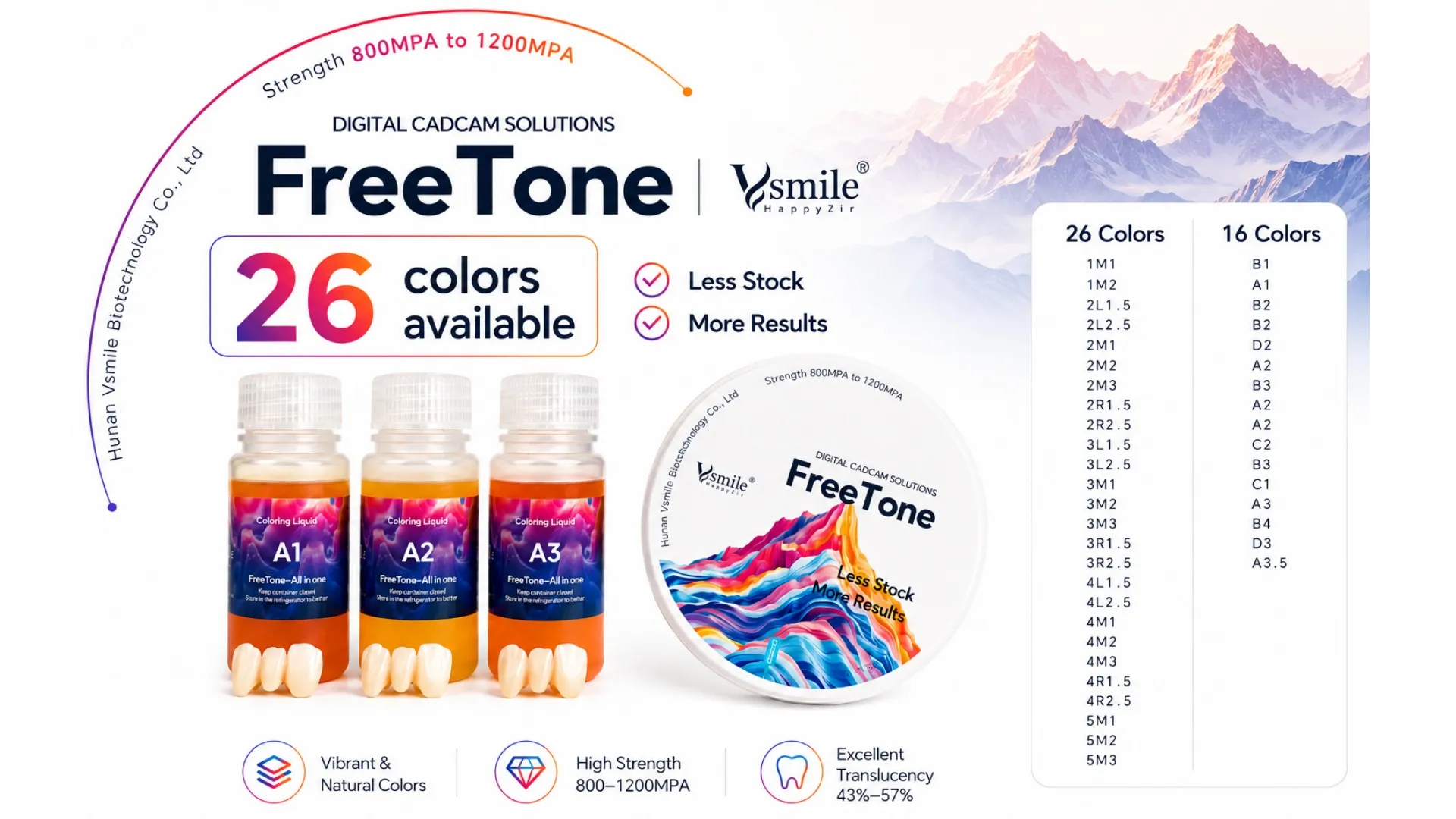
Whether you're crafting A1 or D4, FreeTone White Zirconia Disc gives you total shade control with just one SKU — streamlining inventory and increasing productivity.
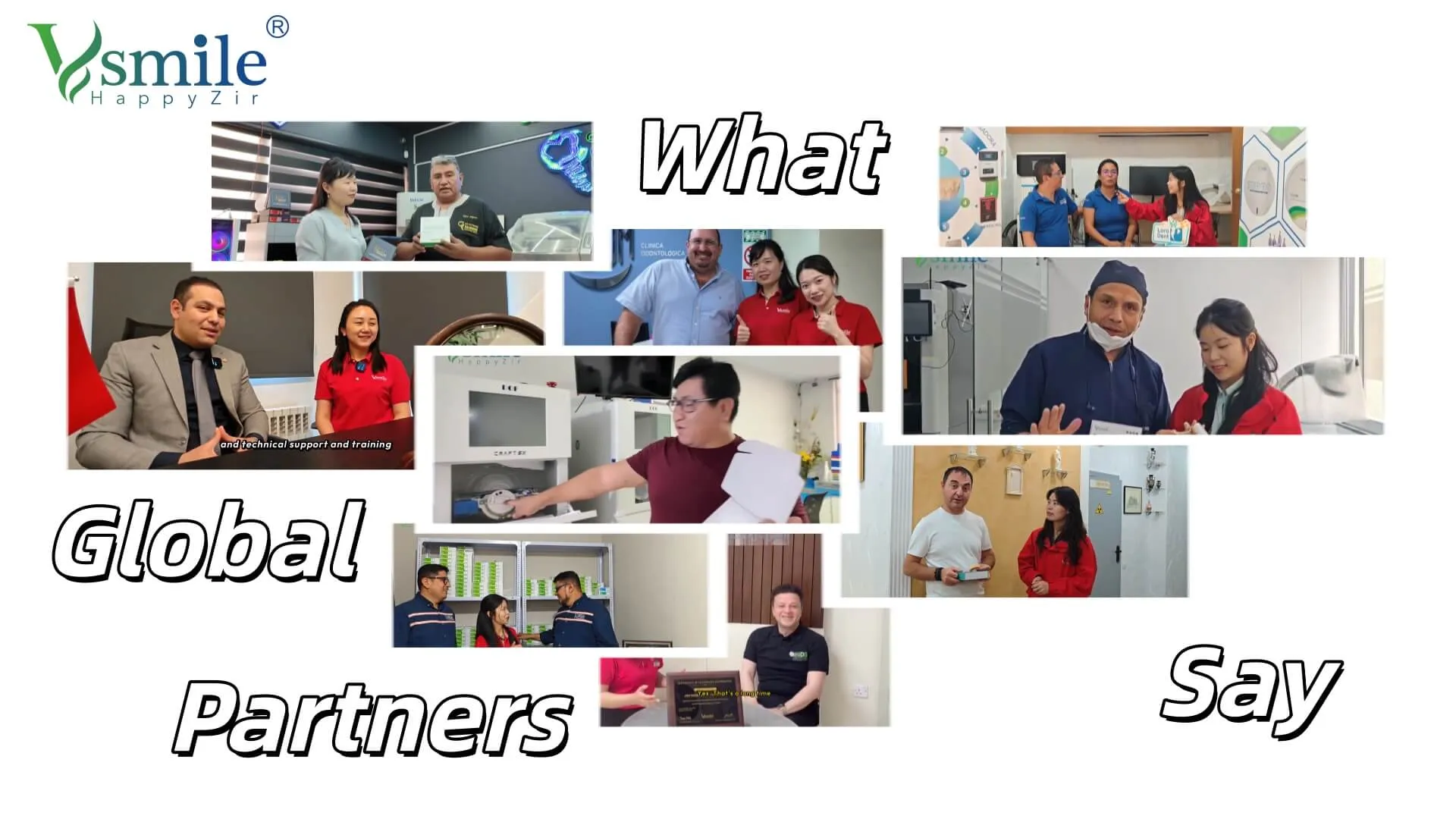
Voices from Vsmile Global Partners — Stories of Trust, Growth, and Smiles We Create Together.
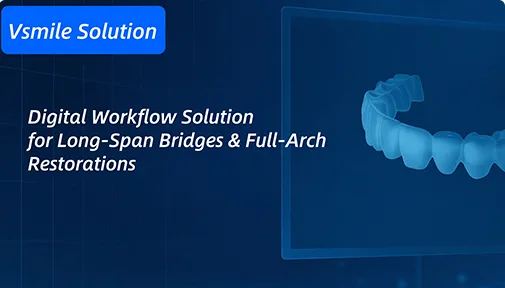
Long-span and full-arch restorations represent some of the most complex and failure-prone procedures in digital dentistry. Challenges include connector fractures, marginal misfits, sintering deformation, and low clinical longevity. Labs and clinics face a high rate of remakes, increased cost, and pressure to maintain quality under tight delivery deadlines.
2025.5.22

Vsmile offers a complete, validated digital workflow — from scanning to final zirconia bridge — that helps labs and clinics deliver life-changing smiles faster, with greater confidence and repeatable quality.


Tel: +86-731-85682958
Fax: +86-731-85682958
WhatsApp: +8615084896166/+8618569525651
Email: [email protected]
Address:
Room 1202-1203, Building A4,Huanchuang Corporate Park,No.2450, Yuelu West Avenue, Changsha Hi-tech Development District, Changsha, China.


























 EN
 fr
 ru
 nl
 uk
 fil
 lo
 ko
 it
 es
 el
 pt
 de
 th
 be
 sq
 tr
 ar
 vi
 pl