Trusted by 6000+ Labs · ISO13485 Certified · Fast Delivery from 3 Factories


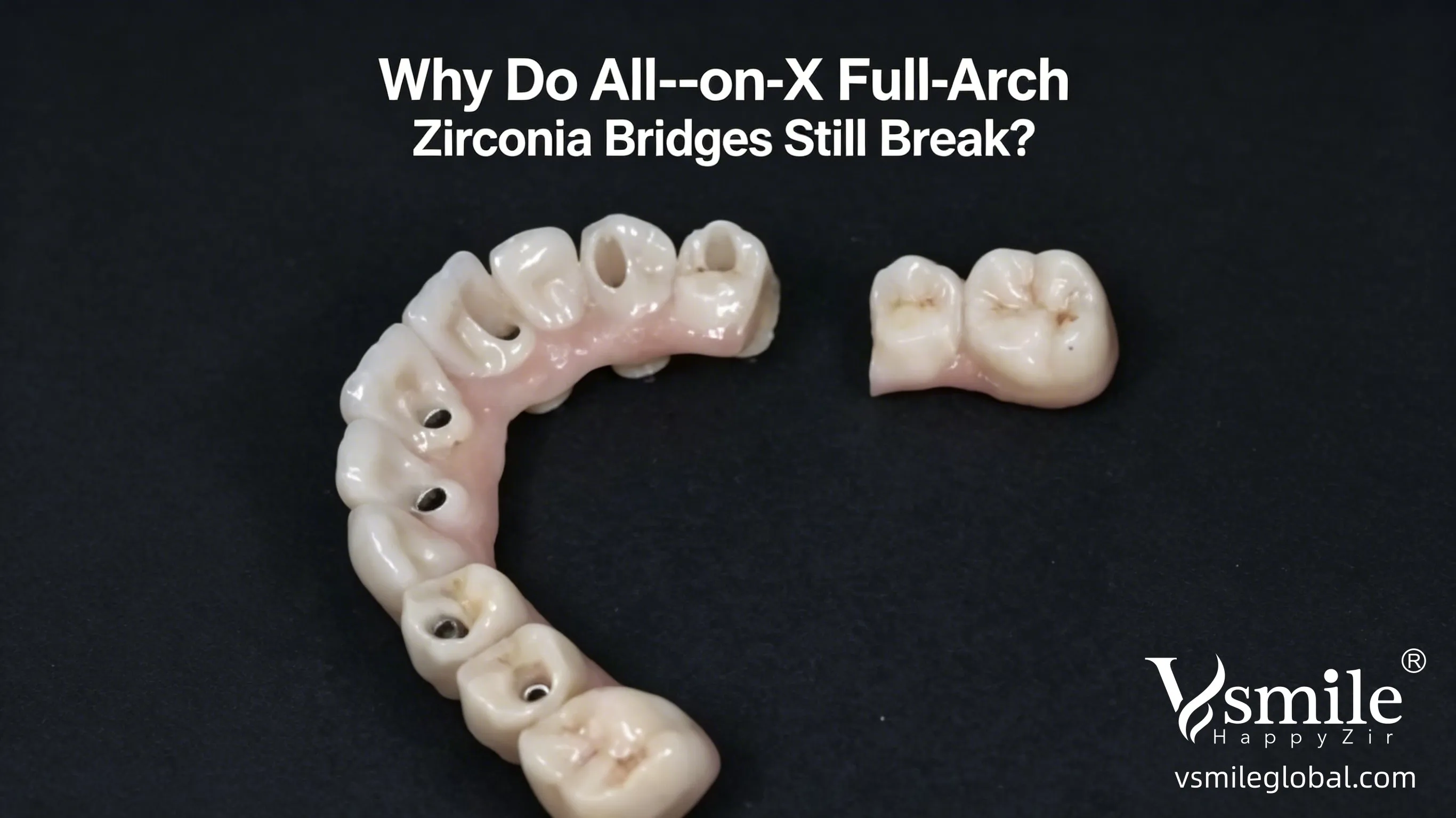
All-on-X restorations have become a reliable solution for full-arch rehabilitation. However, fractures—especially in zirconia bridges—still occur in daily clinical and laboratory practice.
For implant clinics and dental labs, this raises an important question:
If zirconia is so strong, why do full-arch bridges still break?
The answer lies in understanding that fracture is not caused by a single factor. It is the result of material properties, structural design, processing quality, and occlusal forces working together.
When selecting zirconia, flexural strength is often the first parameter considered. While it is important, relying on strength alone can be misleading.
Two key properties must be evaluated together:
Full-arch restorations experience continuous bending forces, particularly in long spans and cantilever areas. Higher flexural strength improves resistance to deformation and fracture under load.
In reality, most fractures do not happen suddenly. They start from microcracks, which may develop during milling, adjustment, or function.
Fracture toughness determines whether these microcracks remain stable—or gradually propagate until failure occurs.
For All-on-X restorations, fracture toughness is just as critical as strength.
With the development of high-translucency zirconia, clinicians and labs now have more aesthetic options. However, increased translucency typically comes with reduced mechanical performance.
Higher yttria content improves translucency but reduces transformation toughening, which plays a key role in resisting crack propagation.
This is especially important in cases involving:
Long-span bridges
Limited prosthetic space
Posterior load concentration
Bruxism or high occlusal forces
In these situations, selecting a zirconia material with higher strength and toughness is often a safer choice.
In practice, many zirconia fractures are not caused by the material itself—but by design limitations.
Key risk factors include:
Insufficient connector cross-section
Excessive cantilever length
Inadequate framework thickness
Sharp transitions that create stress concentration
For both clinicians and technicians, this highlights a critical point:
Even the best material cannot compensate for a weak design.
Ensuring proper connector dimensions and load distribution is one of the most effective ways to reduce fracture risk.
Fracture often starts long before the prosthesis is delivered.
During lab and chairside procedures, several factors can introduce micro-defects:
Aggressive grinding or adjustment
Improper polishing after adjustment
Excessive or incorrect sandblasting
Non-optimized sintering protocols
Rapid temperature changes creating residual stress
These micro-damages can act as starting points for crack propagation under functional load.
For dental labs, standardized workflows and controlled processing are essential to ensure consistent outcomes.
Material and design decisions must always be aligned with clinical reality.
Important considerations include:
Patient parafunction (e.g., bruxism)
Bite force distribution
Opposing dentition (natural teeth, zirconia, or other materials)
Implant positioning and support
Improper occlusion or uneven load distribution can significantly increase stress in localized areas, especially around connectors and cantilevers.
For implant clinics and dental labs aiming to improve long-term outcomes, a systematic approach is key:
Select zirconia based on mechanical requirements, not just translucency.
Ensure sufficient connector size, thickness, and controlled cantilever length.
Minimize surface damage and follow validated sintering and finishing protocols.
Distribute forces evenly and identify high-risk patients early.
Successful All-on-X restorations are not defined by a single parameter.
They are the result of:
Appropriate material selection
Thoughtful prosthetic design
Controlled laboratory processing
Proper clinical execution
For both clinics and dental labs, understanding how these elements interact is the key to reducing complications and improving long-term success.
Zirconia remains one of the most powerful materials for full-arch restorations—but only when used correctly.
By shifting the focus from “which zirconia is strongest” to “how the entire system performs under real conditions,” clinicians and technicians can significantly reduce fracture risks and deliver more predictable outcomes.
If you are working on All-on-X cases and want to optimize material selection or workflow, feel free to reach out. We are happy to share practical recommendations based on real clinical and laboratory experience.

Vsmile is pleased to announce its participation in the 3rd Algerian Dental Expo (ADEX 2026), taking place from November 11 to 14, 2026, at the Palais des Expositions (SAFEX) in Algiers, Algeria.
At this year's exhibition, Vsmile will join its local distribution partner, WHITE TRADER, at Pavillon A. Together, the teams will connect with dental professionals and showcase dental materials, CAD/CAM solutions and practical applications for modern dental laboratory workflows.

This bundle combines the powerful VSF300 fast sintering furnace with 4 pcs of 3D Prism multilayer zirconia blocks, delivering speed, capacity, and consistent esthetics in one package.

Passive fit failure is rarely caused by a single factor. Instead, it is the result of error stacking across the entire digital and manufacturing workflow.

Fracture and microcracks are among the most critical failure modes in All-on-X (AOX) zirconia restorations.

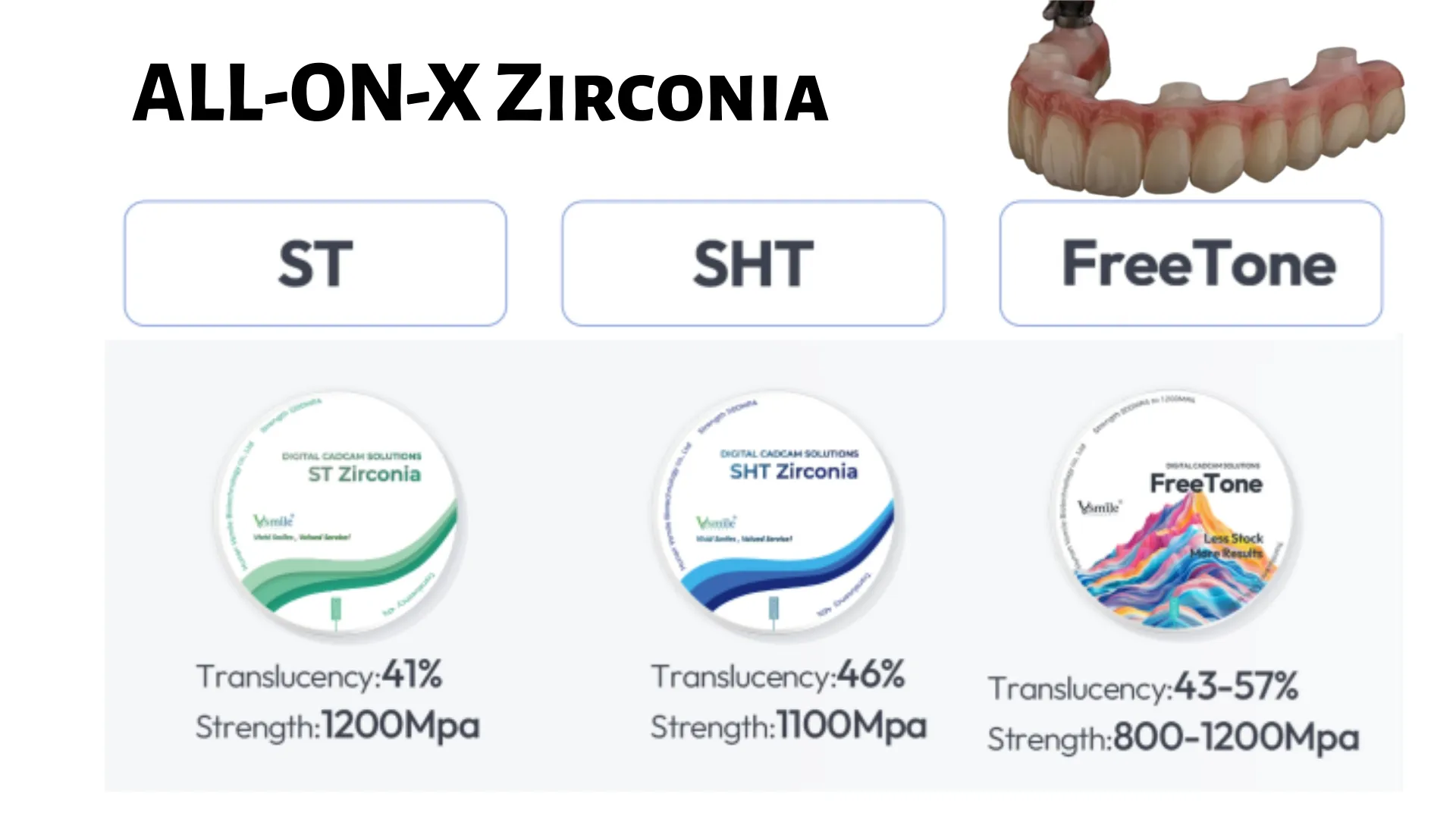
Whether you're crafting A1 or D4, FreeTone White Zirconia Disc gives you total shade control with just one SKU — streamlining inventory and increasing productivity.

Voices from Vsmile Global Partners — Stories of Trust, Growth, and Smiles We Create Together.

Long-span and full-arch restorations represent some of the most complex and failure-prone procedures in digital dentistry. Challenges include connector fractures, marginal misfits, sintering deformation, and low clinical longevity. Labs and clinics face a high rate of remakes, increased cost, and pressure to maintain quality under tight delivery deadlines.
2025.5.22

Vsmile offers a complete, validated digital workflow — from scanning to final zirconia bridge — that helps labs and clinics deliver life-changing smiles faster, with greater confidence and repeatable quality.


Tel: +86-731-85682958
Fax: +86-731-85682958
WhatsApp: +8615084896166/+8618569525651
Email: [email protected]
Address:
Room 1202-1203, Building A4,Huanchuang Corporate Park,No.2450, Yuelu West Avenue, Changsha Hi-tech Development District, Changsha, China.



















































 EN
 fr
 ru
 nl
 uk
 fil
 lo
 ko
 it
 es
 el
 pt
 de
 th
 be
 sq
 tr
 ar
 vi
 pl