Trusted by 6000+ Labs · ISO13485 Certified · Fast Delivery from 3 Factories


Digital workflows are a key advance for All-on-X restorations, standardising clinical and laboratory steps to improve precision, efficiency and patient outcomes. This article outlines core components, clinical and lab benefits, and emerging innovations so clinicians and laboratories can adopt more predictable, faster workflows.
Integrated clinical and laboratory technologies—including digital impression systems and CAD CAM technology—reduce manual handling and variation. The result is more consistent prosthetic components, shorter treatment time and improved clinical results for practices using structured digital processes.
The digital workflow covers planning, surgical execution and prosthetic fabrication using digital impressions, 3D modelling and CAD CAM. Used systematically, these tools help clinicians create precise plans and improve communication with dental laboratories, aligning expectations and procedural goals.
Digital workflows provide a structured framework from assessment to final restoration, offering visualization and analytic tools that support evidence-based decisions and reproducible, high-precision implant care.
Digital impression systems and CAD CAM technology are central to modern All-on-X workflows.
Together, these components streamline the restorative workflow, improve prosthetic fit and reduce adjustments and remakes, raising overall patient satisfaction.
Digital planning and fabrication shorten chair time and make outcomes more predictable. Accurate digital impressions and guided implant surgery reduce fit and placement issues, supporting better aesthetic, functional results and long-term stability of restorations.
Advanced visualization and simulation tools from intraoral scanning and CAD integration produce detailed plans that labs and clinicians can exchange efficiently. Surgical guides derived from these plans improve placement accuracy and reduce procedural variation. Our advanced solutions are designed to enhance your workflow and improve patient outcomes.
Guided implant surgery allows clinicians to execute plans with high fidelity, translating planning precision into better clinical outcomes.
CAD CAM systems let labs fabricate restorations that closely match patient anatomy, cutting manual adjustments. Integrated design-to-manufacture workflows and high-precision scanning shorten lead times and improve consistency across cases.
This operational efficiency accelerates treatment completion, benefiting both laboratories and patients.
Digital dentistry solutions offer clear benefits to laboratories and clinicians, including:
These advantages make digital workflows especially valuable for complex All-on-X cases.
| Benefit | Description | Impact Level |
|---|---|---|
| Increased Efficiency | Streamlined processes reduce treatment time | High |
| Cost-Effectiveness | Minimizes errors and remakes, saving costs | Medium |
| Enhanced Patient Outcomes | Better-fitting restorations improve satisfaction | High |
The table summarises principal benefits and their relative impact on clinical and laboratory operations.
Key developments driving digital implant workflows include:
These advances are improving efficiency, predictability and access to digital implant workflows in clinical and laboratory settings.
AI tools analyse clinical data to suggest evidence-based options and optimise steps in planning and design. When combined with fully guided surgery, AI-supported workflows enhance placement accuracy, reduce risk and improve reliability of outcomes.
Over time, these technologies will further support clinical decision-making and procedure execution in All-on-X workflows.
New digital materials offer improved mechanical properties, aesthetics and biocompatibility, supporting longer-lasting restorations. Integrating these materials into digital fabrication processes raises standards of function and appearance for patients.
They improve efficiency, accuracy and patient satisfaction by shortening planning and fabrication timelines, reducing chair time and producing more accurate impressions and prosthetics.
AI analyses clinical data to highlight patterns and propose options, speeding planning and helping clinicians tailor interventions to individual cases.
They enhance mechanical performance and aesthetics while being compatible with digital fabrication, improving restoration longevity and appearance.
Yes—by reducing errors and remakes and shortening cycles, practices can allocate resources better and increase throughput.
Intraoral scanning and precise planning reduce procedure time, increase comfort and lower the need for postoperative adjustments.
Guided surgery translates digital plans into accurate implant placement, supporting optimal aesthetic and functional outcomes and reducing complication risk.

Vsmile is pleased to announce its participation in the 3rd Algerian Dental Expo (ADEX 2026), taking place from November 11 to 14, 2026, at the Palais des Expositions (SAFEX) in Algiers, Algeria.
At this year's exhibition, Vsmile will join its local distribution partner, WHITE TRADER, at Pavillon A. Together, the teams will connect with dental professionals and showcase dental materials, CAD/CAM solutions and practical applications for modern dental laboratory workflows.
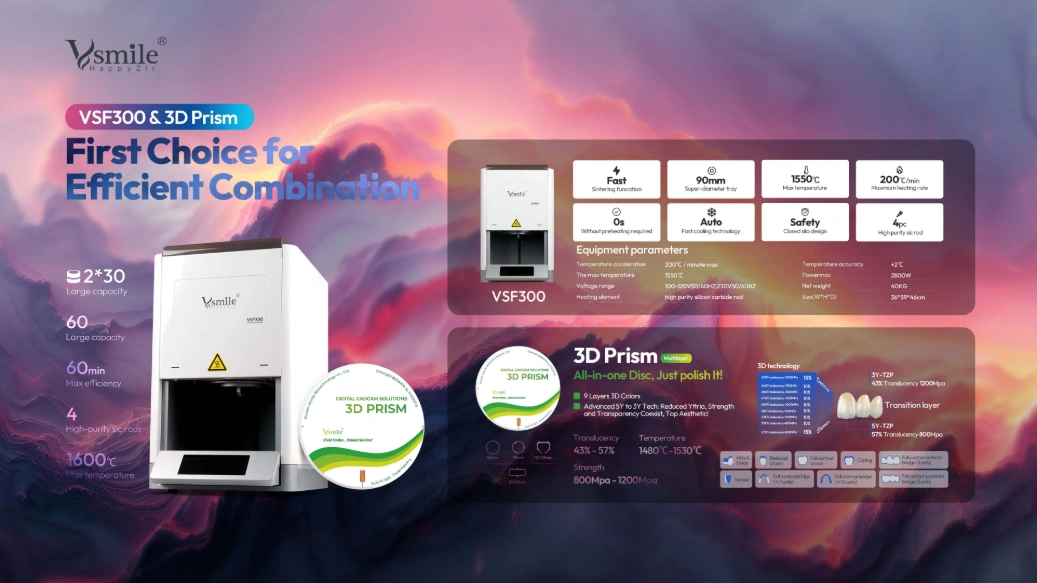
This bundle combines the powerful VSF300 fast sintering furnace with 4 pcs of 3D Prism multilayer zirconia blocks, delivering speed, capacity, and consistent esthetics in one package.
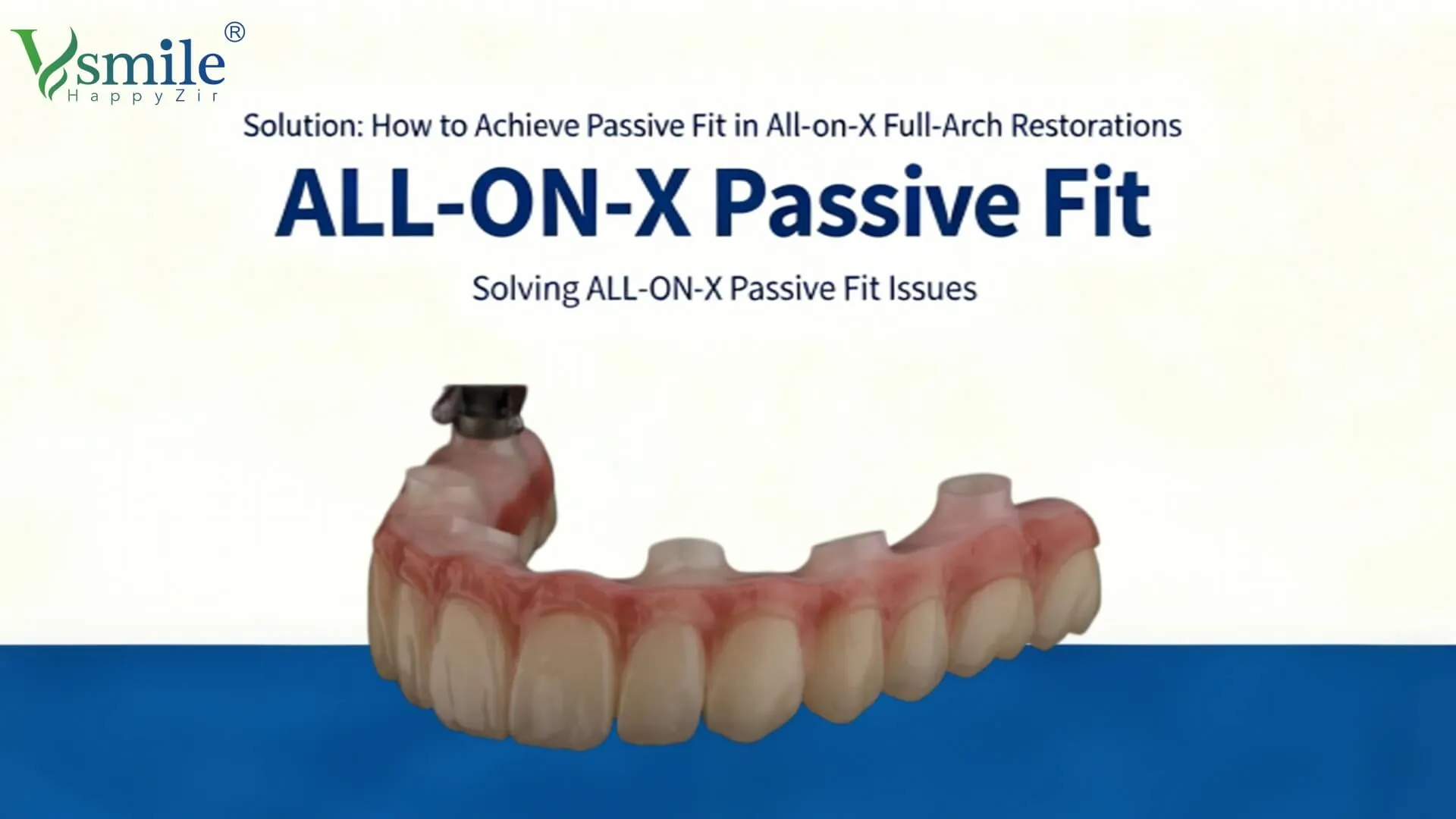
Passive fit failure is rarely caused by a single factor. Instead, it is the result of error stacking across the entire digital and manufacturing workflow.
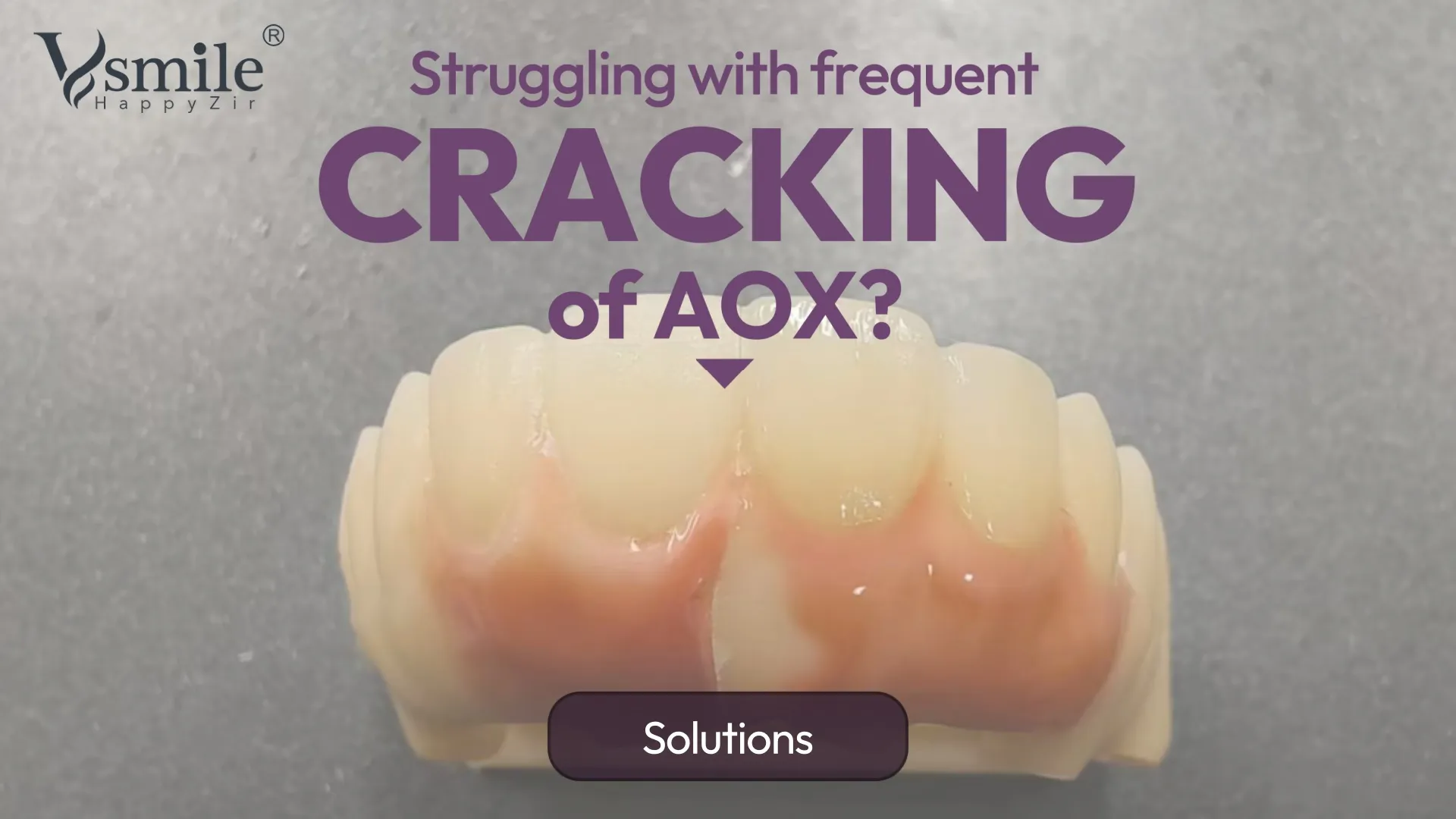
Fracture and microcracks are among the most critical failure modes in All-on-X (AOX) zirconia restorations.
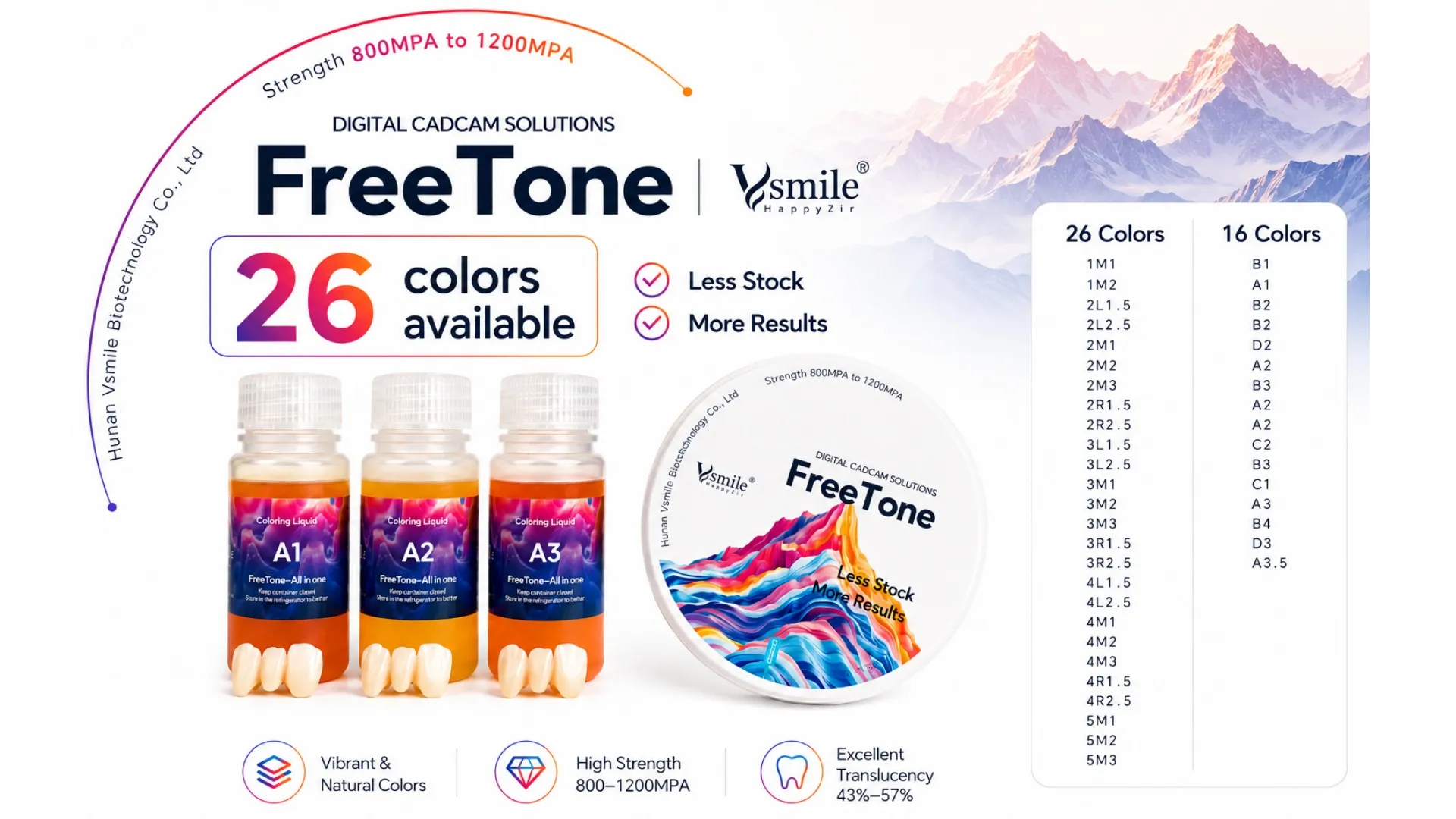
Whether you're crafting A1 or D4, FreeTone White Zirconia Disc gives you total shade control with just one SKU — streamlining inventory and increasing productivity.
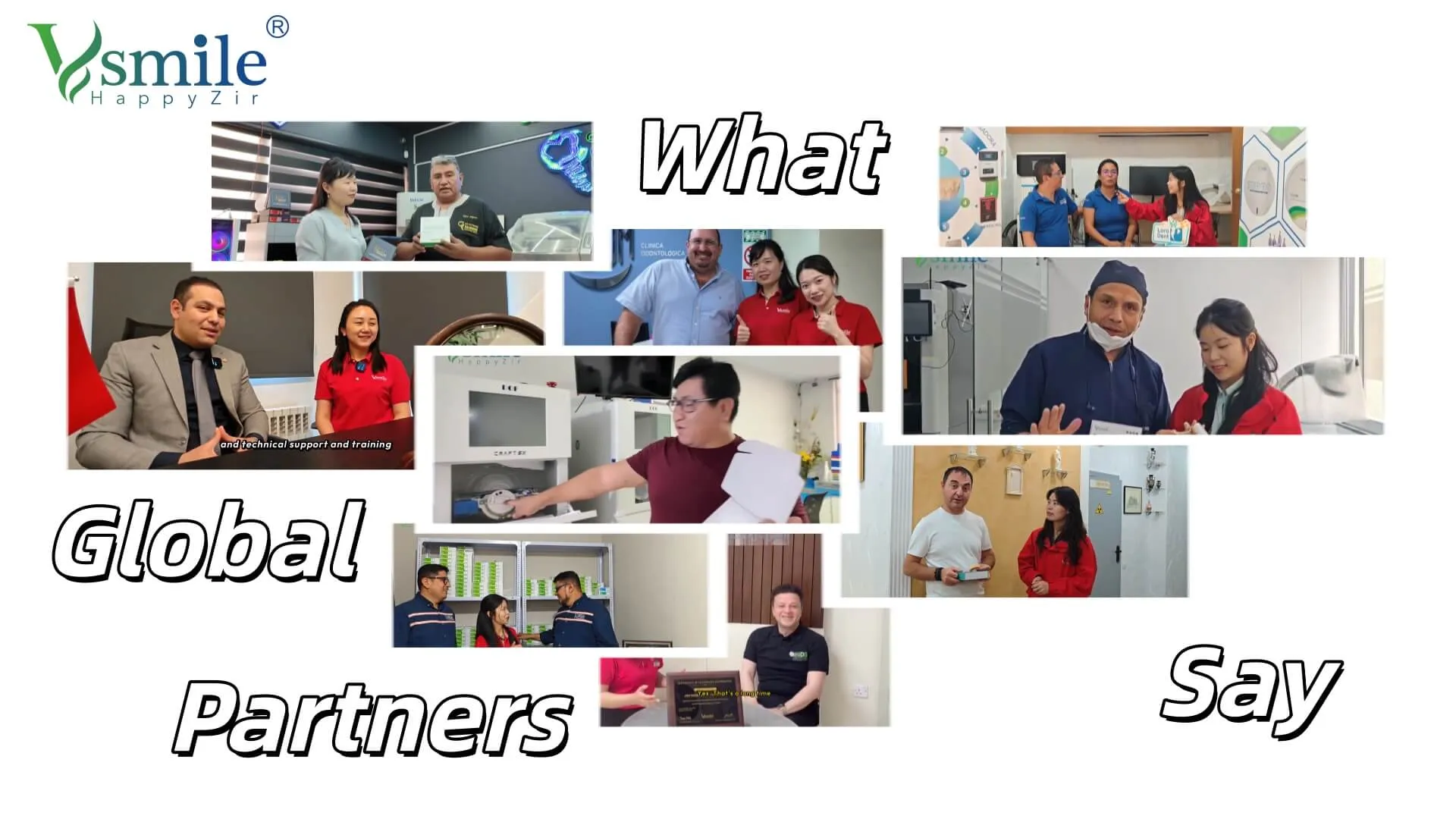
Voices from Vsmile Global Partners — Stories of Trust, Growth, and Smiles We Create Together.
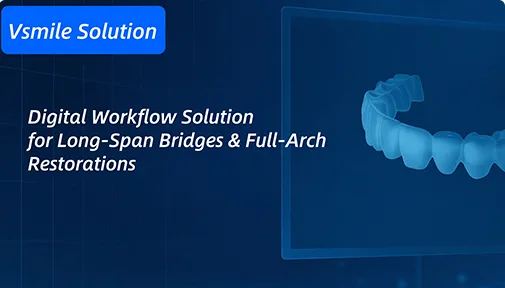
Long-span and full-arch restorations represent some of the most complex and failure-prone procedures in digital dentistry. Challenges include connector fractures, marginal misfits, sintering deformation, and low clinical longevity. Labs and clinics face a high rate of remakes, increased cost, and pressure to maintain quality under tight delivery deadlines.
2025.5.22

Vsmile offers a complete, validated digital workflow — from scanning to final zirconia bridge — that helps labs and clinics deliver life-changing smiles faster, with greater confidence and repeatable quality.


Tel: +86-731-85682958
Fax: +86-731-85682958
WhatsApp: +8615084896166/+8618569525651
Email: [email protected]
Address:
Room 1202-1203, Building A4,Huanchuang Corporate Park,No.2450, Yuelu West Avenue, Changsha Hi-tech Development District, Changsha, China.



























 EN
 fr
 ru
 nl
 uk
 fil
 lo
 ko
 it
 es
 el
 pt
 de
 th
 be
 sq
 tr
 ar
 vi
 pl