Trusted by 6000+ Labs · ISO13485 Certified · Fast Delivery from 3 Factories


The All-on-X workflow uses integrated digital tools to improve outcomes and simplify full-arch implant procedures. This article summarises the procedural sequence from implant planning to final restoration and highlights the digital technologies and practices that support reliable, efficient delivery for clinicians seeking better precision and operational performance.
The adoption of digital technologies has materially reconfigured clinical workflows and practice performance across dentistry.
Digital Dentistry Workflow: Accuracy, Outcomes & Streamlined Operations
The incorporation of digital technologies has brought about a revolution in the profession of dentistry, resulting in greater diagnostic accuracy, enhanced patient outcomes and streamlined operations. Intraoral scanners, cone beam computed tomography (CBCT), computer-aided design/computer-aided manufacturing (CAD/CAM) systems, and 3D printing have profoundly influenced the field of prosthodontics, implantology and orthodontics. These developments provide enhanced precision in planning, manufacture and customization of dental prostheses and surgical guides.
The All-on-X process is organised into discrete stages that govern responsibilities, data flow and quality checks from diagnosis to prosthetic delivery.
Hunan Vsmile Biotechnology Co, Ltd specialises in digital dental equipment and software that support these stages, helping practices achieve consistent accuracy and efficiency.
The protocol relies on complementary technologies that capture, analyse and fabricate clinical data for accurate implant placement and prosthetic fit.
Combined, these tools reduce manual hand-offs, lower cumulative error and speed delivery of definitive restorations.
Defined protocols improve efficiency and reliability. Clear standards for data capture, review gates and team responsibilities reduce variation across cases.
These measures reduce rework, increase predictability and improve patient satisfaction.
The clinical sequence produces digital deliverables that guide each subsequent step, enabling coordinated clinical and laboratory workflows.
Understanding these stages helps practices integrate All-on-X cases into scheduling and laboratory workflows efficiently.
Digital planning combines volumetric imaging and digital impressions for three-dimensional analysis, reducing anatomical uncertainty and supporting precise implant trajectories. Streamlined fabrication, including faster sintering, shortens prosthetic turnaround while maintaining fit.
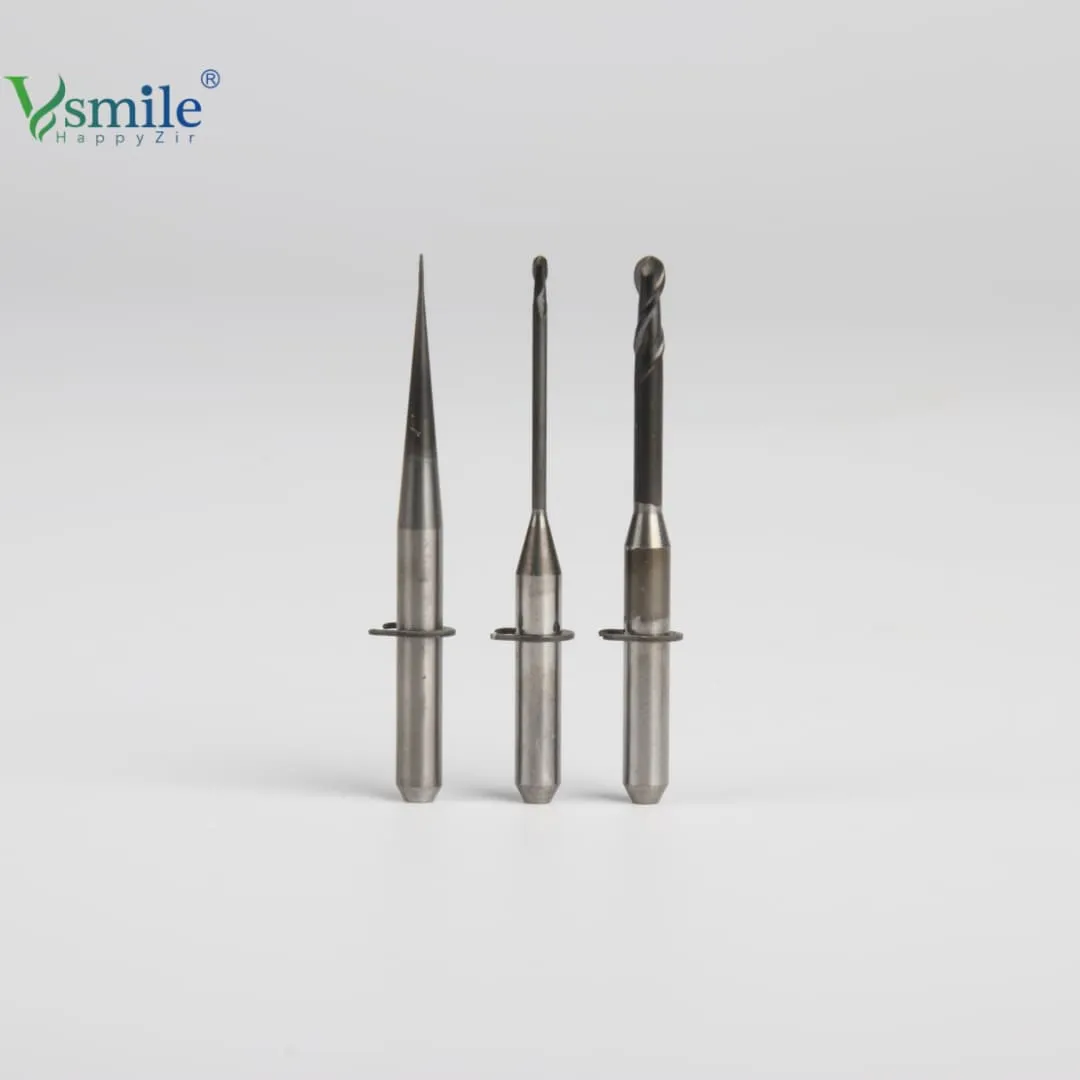
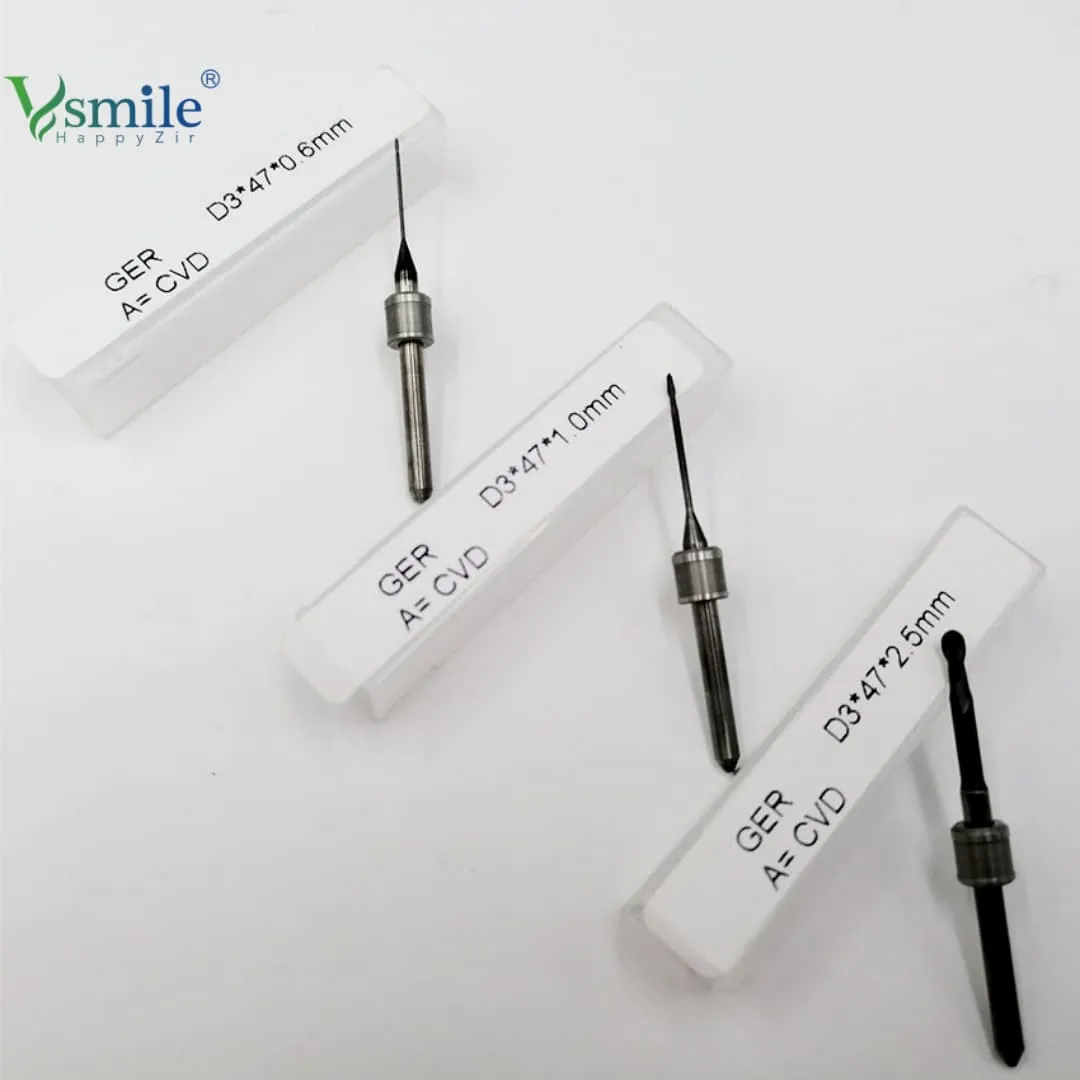
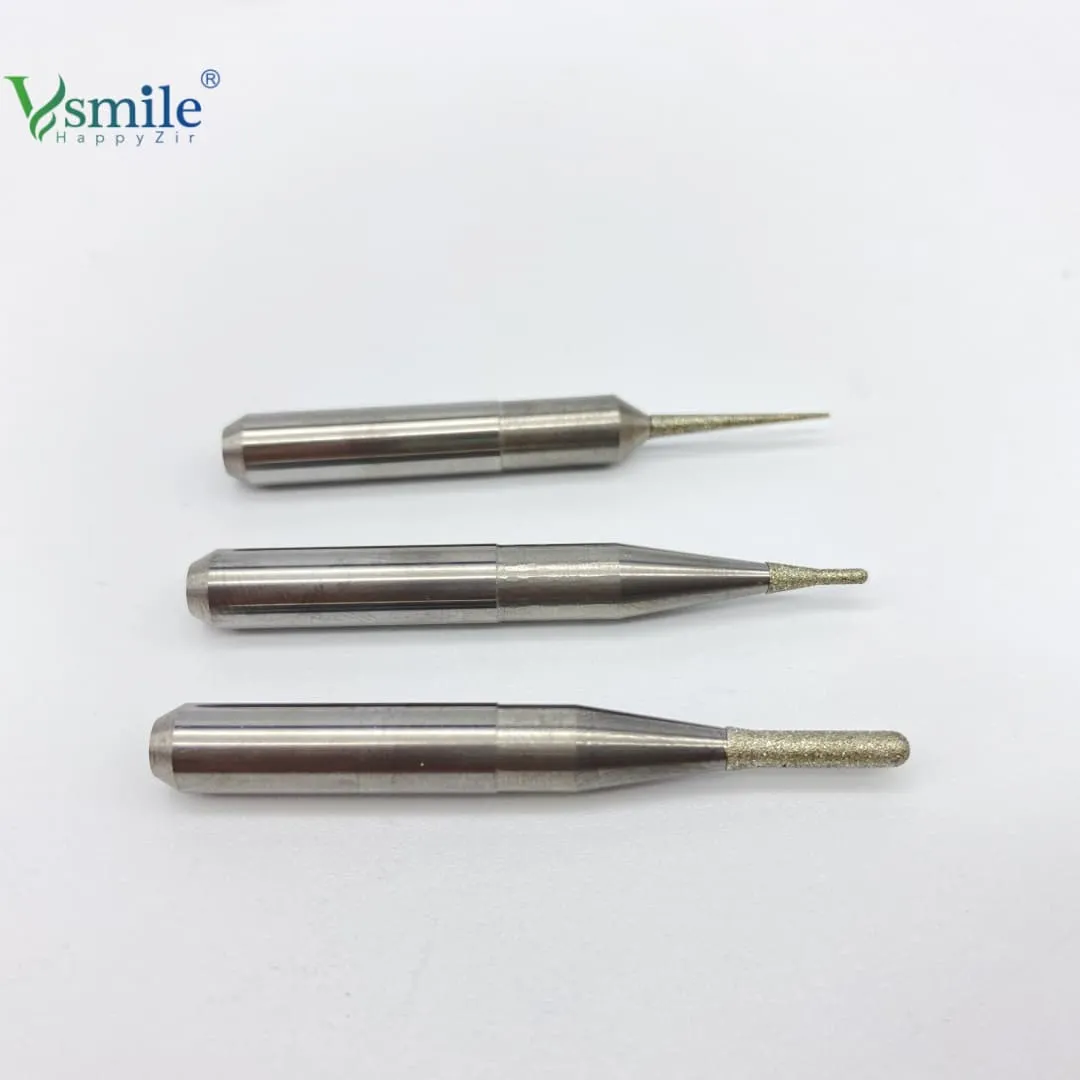
Surgical guides convert the digital plan into the clinic by standardising drill sequences and implant angulation, reducing placement variance and remakes. Proper manufacturing—often via additive or subtractive methods—supports reproducible outcomes aligned with the preoperative plan.
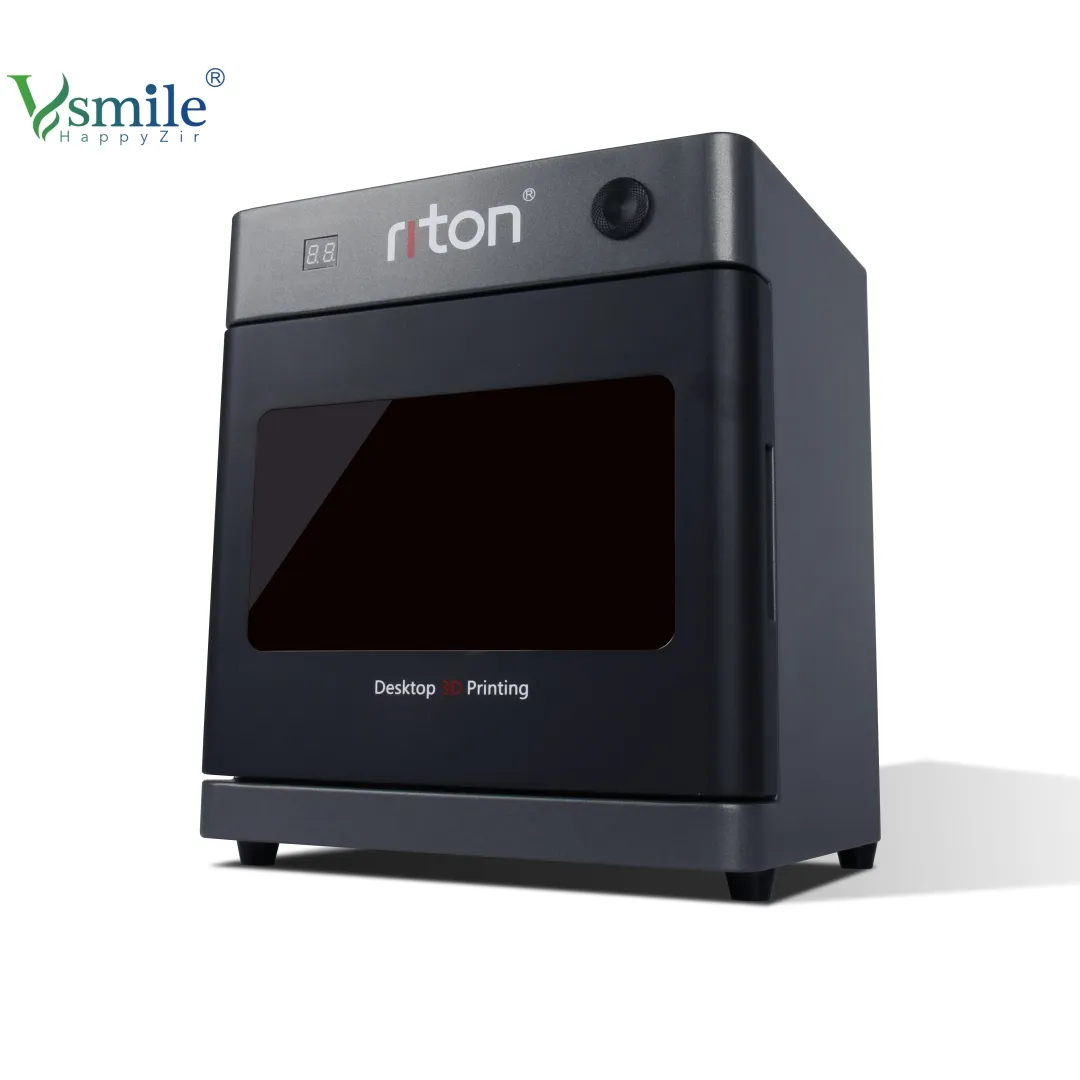
Manufacturing accuracy for these guides is further enhanced by additive and subtractive fabrication technologies such as 3D printing.
3D Printing & Surgical Guides for All-on-X Success
All-on-X cases are rooted in their accuracy, fabricated, and implemented. The use of 3D printing technology allows for the rapid production of highly accurate models, surgical guides, and provisional prostheses, which are crucial for predictable and successful outcomes.
Design software centralises case data, supports precision scanning inputs and offers verification tools that reduce manual adjustments. The result is a shorter design-to-fabrication interval and prostheses matched to functional and aesthetic requirements.
Key features include integration protocols, precision scanning modules and real-time analysis. These reduce adjustment rates and help achieve consistent occlusion and fit.
Together, these capabilities support restorations that meet clinical specifications for function and appearance.
Direct transfer from intraoral scans to CAD and fabrication equipment eliminates redundant steps. This handoff shortens production cycles and reduces administrative burden, delivering restorations to clinics faster.
Final protocols should include staged verification and clear acceptance criteria. Document milestones and confirm readiness before progressing to the next stage.
Rigorous QA maintains clinical standards and consistent patient experiences.
Verification relies on post-processing inspection, fit checks and measurements against the digital plan. Any adjustments required are completed before clinical delivery to ensure comfort and long-term function.
Digital planning yields improved patient comfort and function and reduces remakes and procedural steps. Shorter treatment timelines and fewer interventions contribute to higher satisfaction and greater clinic efficiency.
Advances in imaging, algorithmic planning and fabrication refine implant planning precision and streamline workflows from assessment to final prosthesis delivery.
AI provides analytical tools that evaluate imaging and scan data to support implant positioning and prosthetic design, improving planning accuracy and reducing intraoperative uncertainty. Continued development will extend AI utility across planning and laboratory tasks.
The incorporation of AI strengthens the digital workflow by improving decision support from the initial scan through final restoration.
Optimizing All-on-X Digital Workflow for Efficiency & Outcomes
our services to patients, make our practices more efficient, and optimize our clinical outcomes. AI Specifi- cally, for Implant Dentistry, the digital workflow from the intial scan to the final
International partnerships facilitate knowledge transfer, standardised training and local validation of workflows and products. Collaboration helps practices adopt proven technologies within regional clinical and regulatory environments.
Intraoral scanners produce high-resolution digital impressions that improve diagnostic accuracy, reduce chair time and integrate directly with CAD systems to minimise transfer errors and improve prosthetic fit.
3D printing enables rapid, case-specific fabrication of models, surgical guides and provisional prostheses with repeatable precision, shortening turnaround and supporting accurate placement.
Challenges include capital investment, staff training and a learning curve. Interoperability and technical support are essential; structured training and change management aid successful adoption.
Use stage-specific verification, confirm scan and impression accuracy, conduct thorough planning reviews and perform final restorative checks. Standard operating procedures and ongoing staff education reduce remakes.
Clear communication sets expectations and builds trust. Explain steps, outcomes and preparations, involve patients in decisions and update them through each stage to improve adherence and satisfaction.
The workflow is evolving with AI, machine learning and enhanced imaging to improve planning precision, automate routine analysis and streamline transitions from assessment to final restoration.

Vsmile is pleased to announce its participation in the 3rd Algerian Dental Expo (ADEX 2026), taking place from November 11 to 14, 2026, at the Palais des Expositions (SAFEX) in Algiers, Algeria.
At this year's exhibition, Vsmile will join its local distribution partner, WHITE TRADER, at Pavillon A. Together, the teams will connect with dental professionals and showcase dental materials, CAD/CAM solutions and practical applications for modern dental laboratory workflows.
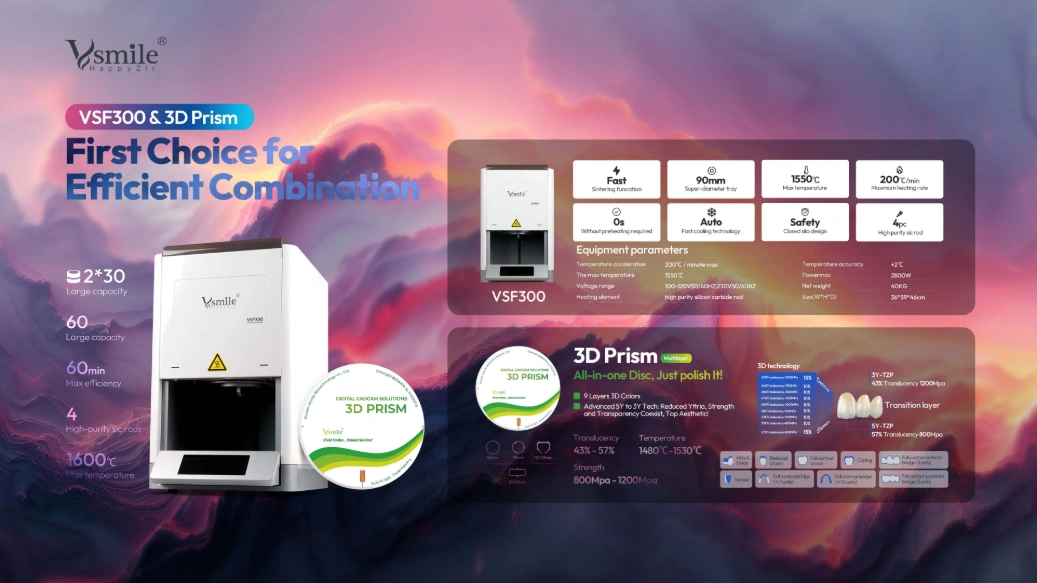
This bundle combines the powerful VSF300 fast sintering furnace with 4 pcs of 3D Prism multilayer zirconia blocks, delivering speed, capacity, and consistent esthetics in one package.
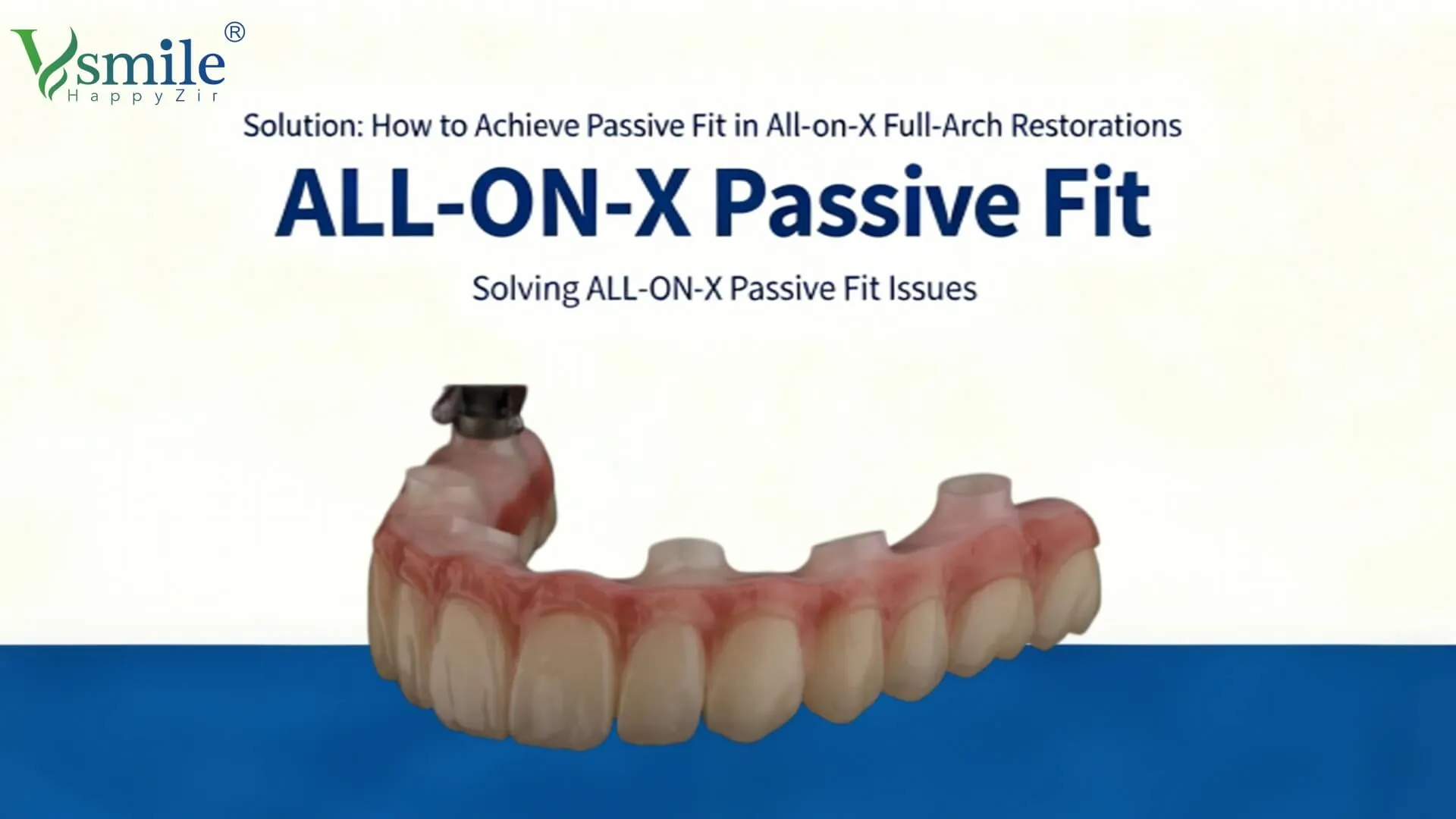
Passive fit failure is rarely caused by a single factor. Instead, it is the result of error stacking across the entire digital and manufacturing workflow.
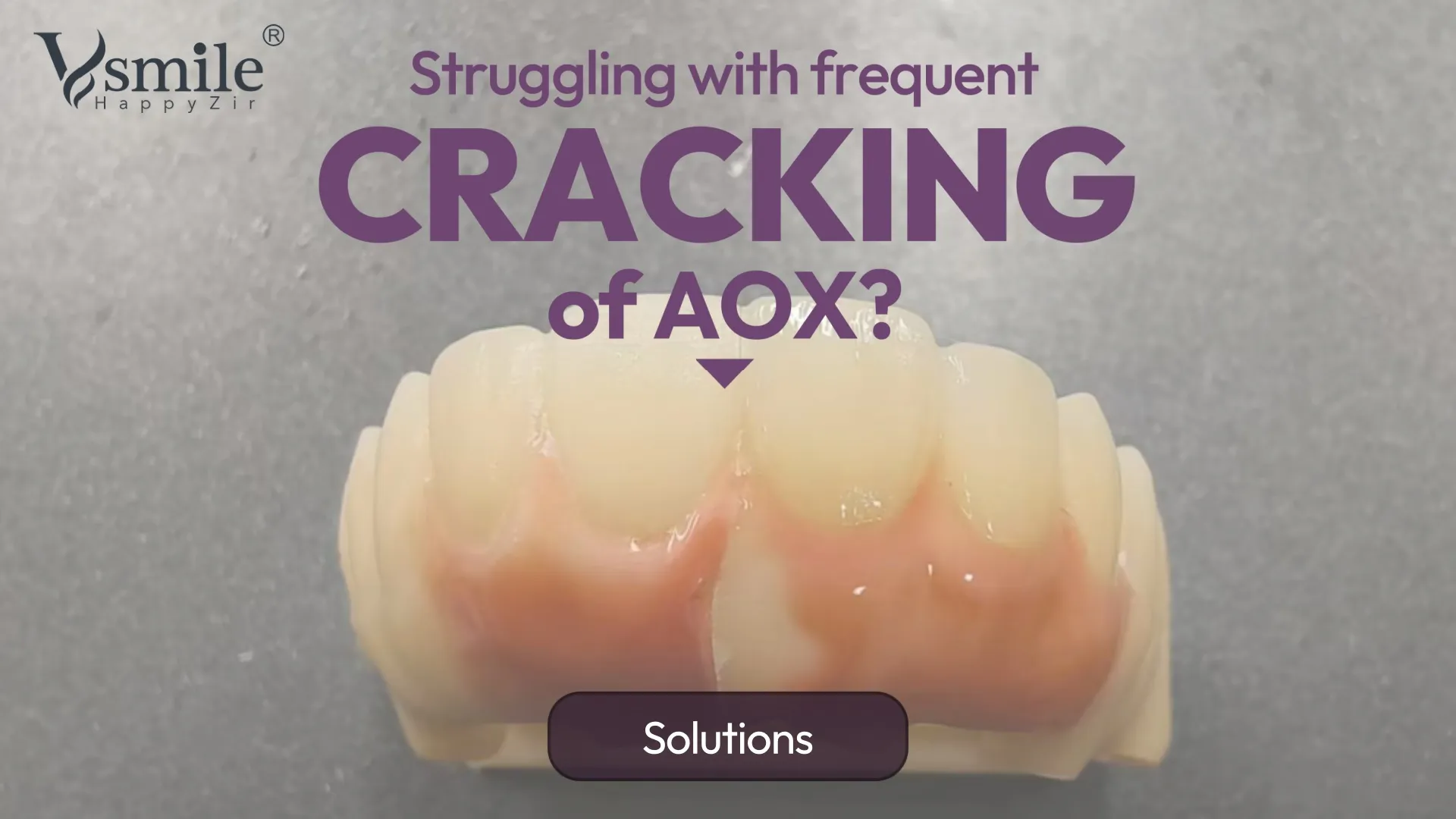
Fracture and microcracks are among the most critical failure modes in All-on-X (AOX) zirconia restorations.
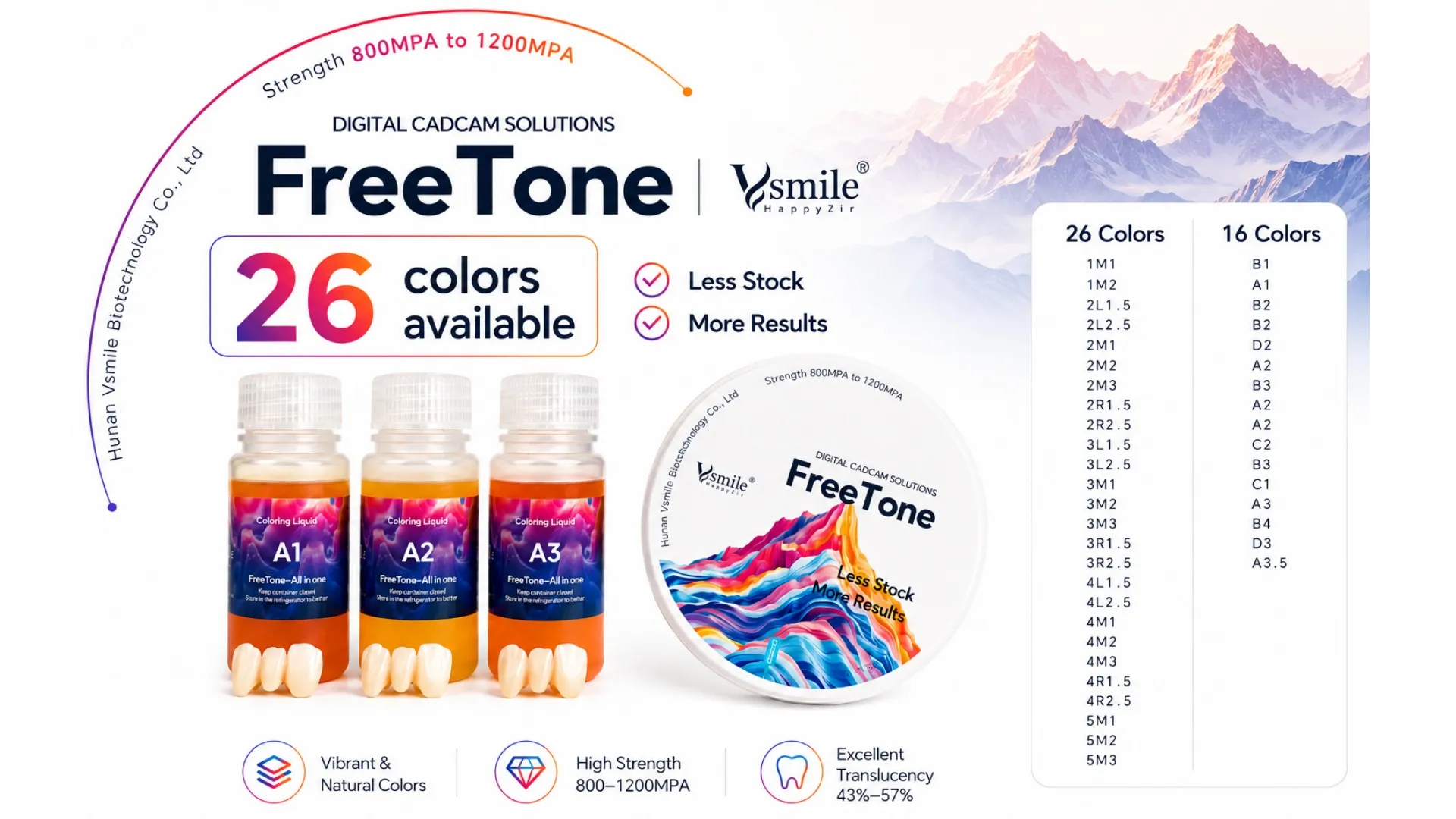
Whether you're crafting A1 or D4, FreeTone White Zirconia Disc gives you total shade control with just one SKU — streamlining inventory and increasing productivity.
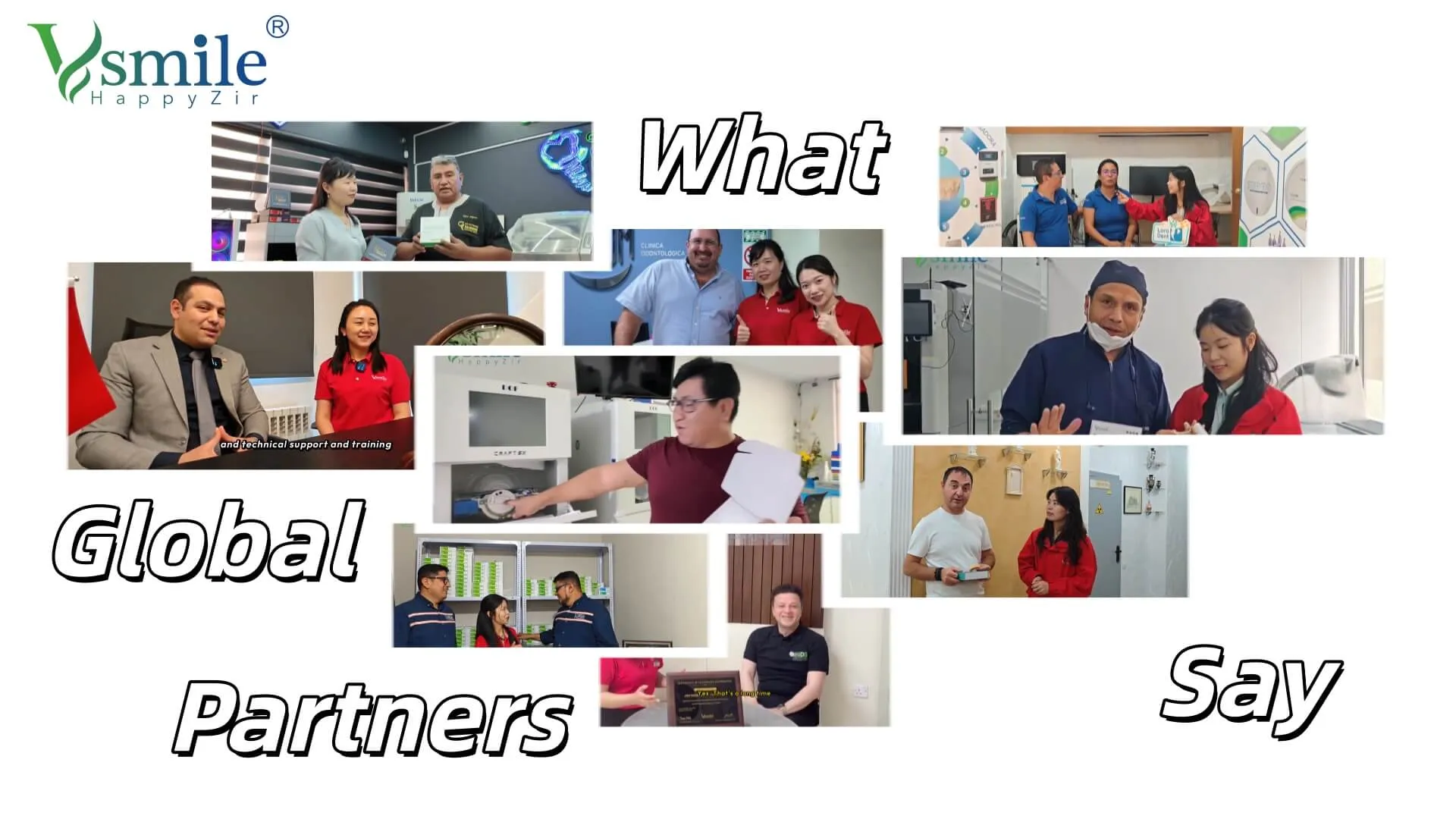
Voices from Vsmile Global Partners — Stories of Trust, Growth, and Smiles We Create Together.
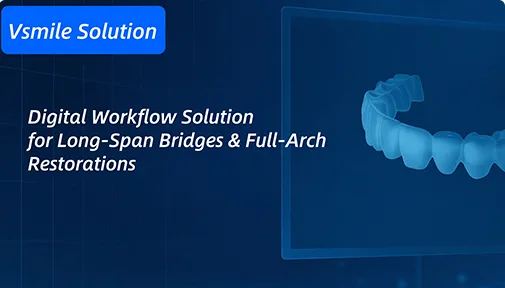
Long-span and full-arch restorations represent some of the most complex and failure-prone procedures in digital dentistry. Challenges include connector fractures, marginal misfits, sintering deformation, and low clinical longevity. Labs and clinics face a high rate of remakes, increased cost, and pressure to maintain quality under tight delivery deadlines.
2025.5.22

Vsmile offers a complete, validated digital workflow — from scanning to final zirconia bridge — that helps labs and clinics deliver life-changing smiles faster, with greater confidence and repeatable quality.


Tel: +86-731-85682958
Fax: +86-731-85682958
WhatsApp: +8615084896166/+8618569525651
Email: [email protected]
Address:
Room 1202-1203, Building A4,Huanchuang Corporate Park,No.2450, Yuelu West Avenue, Changsha Hi-tech Development District, Changsha, China.



























 EN
 fr
 ru
 nl
 uk
 fil
 lo
 ko
 it
 es
 el
 pt
 de
 th
 be
 sq
 tr
 ar
 vi
 pl