Trusted by 6000+ Labs · ISO13485 Certified · Fast Delivery from 3 Factories


Dental impressions are the foundation of restorative dentistry. For decades, traditional impression materials defined how crowns, bridges, implants, and dentures were made. Today, however, a major shift is underway. Intraoral scanners are revolutionizing dental impressions and reshaping the entire dental workflow—from the clinic chair to the laboratory bench.
This article explores how intraoral scanners are transforming dental impressions, why they matter for B2B dental professionals, and how adopting the right dental digital scanners can create long-term competitive advantage.
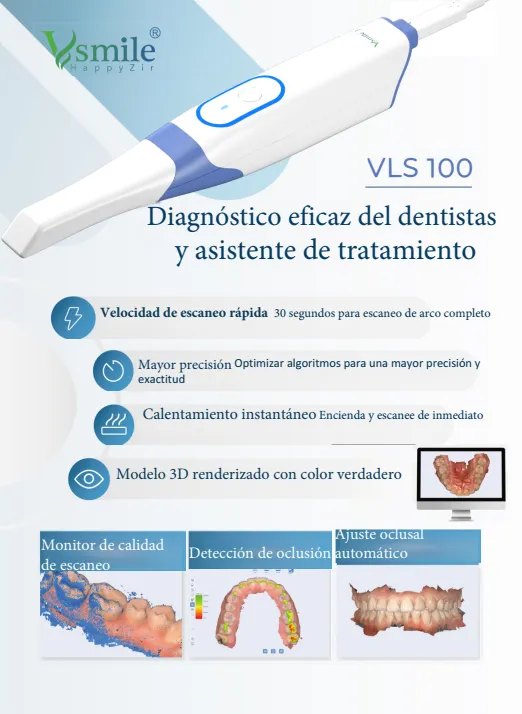
An intraoral 3D scanner is a digital device that captures precise three-dimensional images of teeth, gums, and surrounding oral structures directly inside the patient’s mouth. Instead of using impression trays and materials, clinicians use a handheld oral scanner to record digital data in real time.
The output is a highly accurate digital model that can be:
In short, dental scanners replace physical impressions with digital precision.
Traditional impressions have long been accepted—but they come with limitations that modern dentistry can no longer ignore.
These problems increase costs, extend turnaround times, and reduce predictability.
By contrast, 3D dental scanners address these pain points directly.
Accuracy is the most critical factor in dental impressions.
Modern intraoral 3D scanners provide micron-level accuracy, which directly improves restoration fit and clinical outcomes.
For dental labs and CAD/CAM centers, better input data means:
Traditional impressions slow down workflows.
Digital impressions do the opposite.
Clinics can send cases to labs within minutes, and labs can begin production immediately.
Patient comfort is now a competitive factor.
Clinics using an oral scanner often report higher patient satisfaction and stronger case acceptance.
The true power of dental digital scanners lies in their integration with CAD/CAM workflows.
Remakes are expensive for both clinics and labs.
Clinics and labs using 3D dental scanners are often perceived as more advanced, more professional, and more reliable.
Q: Are intraoral scanners more accurate than traditional impressions?
A: Yes. Digital scans eliminate material distortion and improve consistency.
Q: Can dental scanners be used for all restorative cases?
A: Yes. Crowns, bridges, implants, dentures, and orthodontic appliances all benefit.
Q: Do dental labs prefer digital impressions?
A: Yes. Digital impressions are cleaner, faster, and more predictable.
Q: Are intraoral scanners suitable for high-volume clinics?
A: Absolutely. They support faster workflows and scalability.
Q: Do digital impressions reduce operational costs?
A: Yes. Fewer remakes and faster turnaround lower overall costs.
Q: Is intraoral scanning difficult to learn?
A: No. Most users adapt quickly with basic training.

Vsmile is pleased to announce its participation in the 3rd Algerian Dental Expo (ADEX 2026), taking place from November 11 to 14, 2026, at the Palais des Expositions (SAFEX) in Algiers, Algeria.
At this year's exhibition, Vsmile will join its local distribution partner, WHITE TRADER, at Pavillon A. Together, the teams will connect with dental professionals and showcase dental materials, CAD/CAM solutions and practical applications for modern dental laboratory workflows.

This bundle combines the powerful VSF300 fast sintering furnace with 4 pcs of 3D Prism multilayer zirconia blocks, delivering speed, capacity, and consistent esthetics in one package.

Passive fit failure is rarely caused by a single factor. Instead, it is the result of error stacking across the entire digital and manufacturing workflow.

Fracture and microcracks are among the most critical failure modes in All-on-X (AOX) zirconia restorations.

Whether you're crafting A1 or D4, FreeTone White Zirconia Disc gives you total shade control with just one SKU — streamlining inventory and increasing productivity.

Voices from Vsmile Global Partners — Stories of Trust, Growth, and Smiles We Create Together.

Long-span and full-arch restorations represent some of the most complex and failure-prone procedures in digital dentistry. Challenges include connector fractures, marginal misfits, sintering deformation, and low clinical longevity. Labs and clinics face a high rate of remakes, increased cost, and pressure to maintain quality under tight delivery deadlines.
2025.5.22

Vsmile offers a complete, validated digital workflow — from scanning to final zirconia bridge — that helps labs and clinics deliver life-changing smiles faster, with greater confidence and repeatable quality.


Tel: +86-731-85682958
Fax: +86-731-85682958
WhatsApp: +8615084896166/+8618569525651
Email: [email protected]
Address:
Room 1202-1203, Building A4,Huanchuang Corporate Park,No.2450, Yuelu West Avenue, Changsha Hi-tech Development District, Changsha, China.



















































 EN
 fr
 ru
 nl
 uk
 fil
 lo
 ko
 it
 es
 el
 pt
 de
 th
 be
 sq
 tr
 ar
 vi
 pl