Trusted by 6000+ Labs · ISO13485 Certified · Fast Delivery from 3 Factories


Choosing the right Zirconia block is one of the most crucial decisions for dental laboratories, CAD-CAM centers, and restorative clinics alike. With so many brands, multilayer options, translucency levels, and strength variations out there, it can feel overwhelming—even for seasoned dental technicians and prosthodontists.
Here’s the honest truth:
To help you make smarter choices, we've put together this friendly, comprehensive guide. You’ll learn exactly what to look for when choosing the best Zirconia block for your cases—based on factors like:
This guide is tailored for:
Over the past decade, Zirconia has undergone remarkable evolution. What started as a strong but opaque ceramic is now a versatile material that offers:
Whether you're fabricating single crowns, full-arch bridges, veneers, inlays, onlays, or implant-supported restorations, there's now a Zirconia block specifically designed for each application.
But with so many options, choosing the right one is more important than ever.

Determines suitability for:
General guidelines:
| Strength (MPa) | Recommended Use |
|---|---|
| 600–800 | Aesthetic anterior crowns, veneers |
| 800–1000 | Anterior and posterior crowns |
| 1000–1200+ | Bridges, implant restorations, full arches |
Impacts natural appearance:
Finding the right balance between strength and translucency is key.
Common options include:
A reliable shade system speeds up and simplifies staining and finishing.
Your choice depends on your equipment:
Some Zirconia blocks are optimized for fast sintering, saving you time.
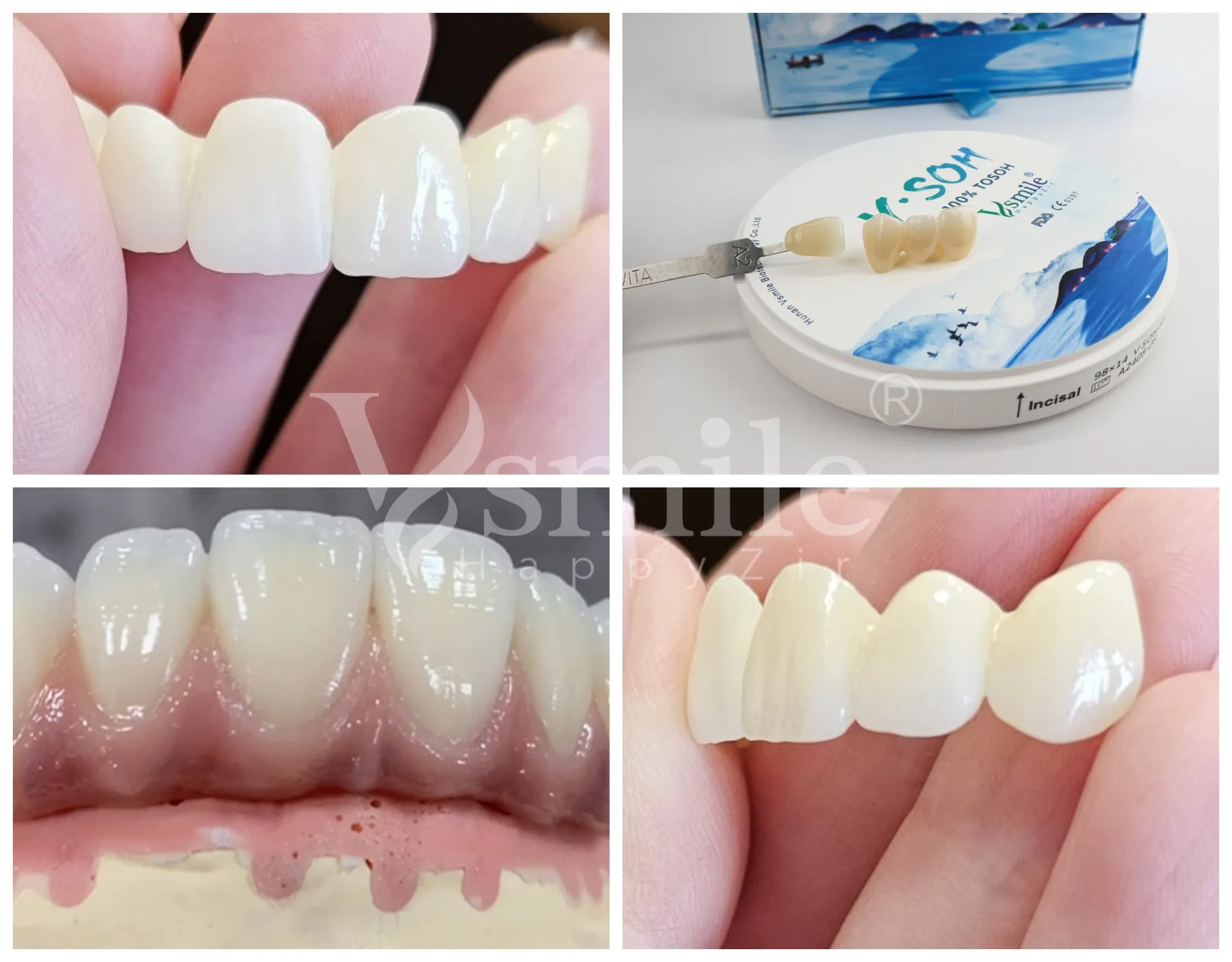
Best for:
Not suitable for:
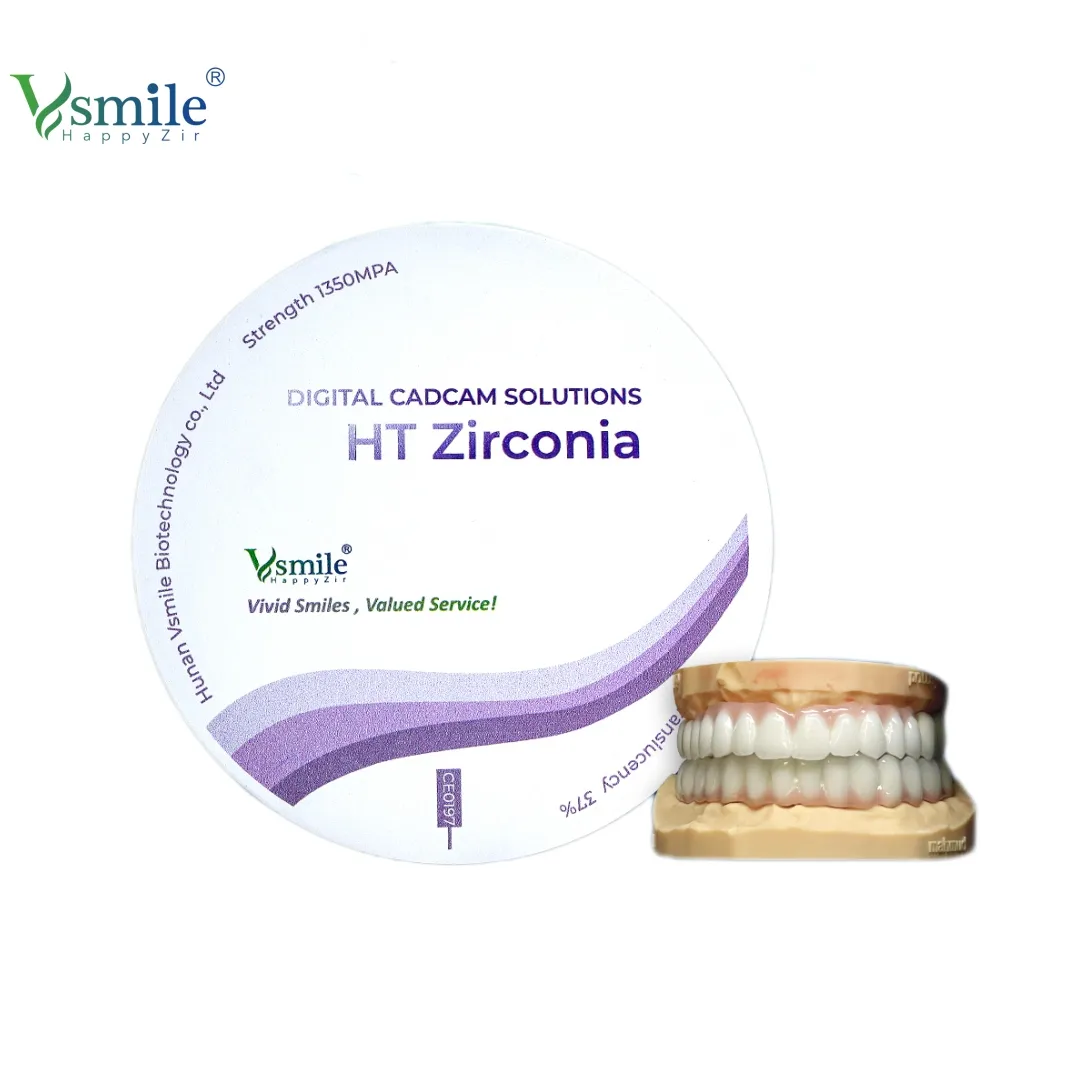
Best for:
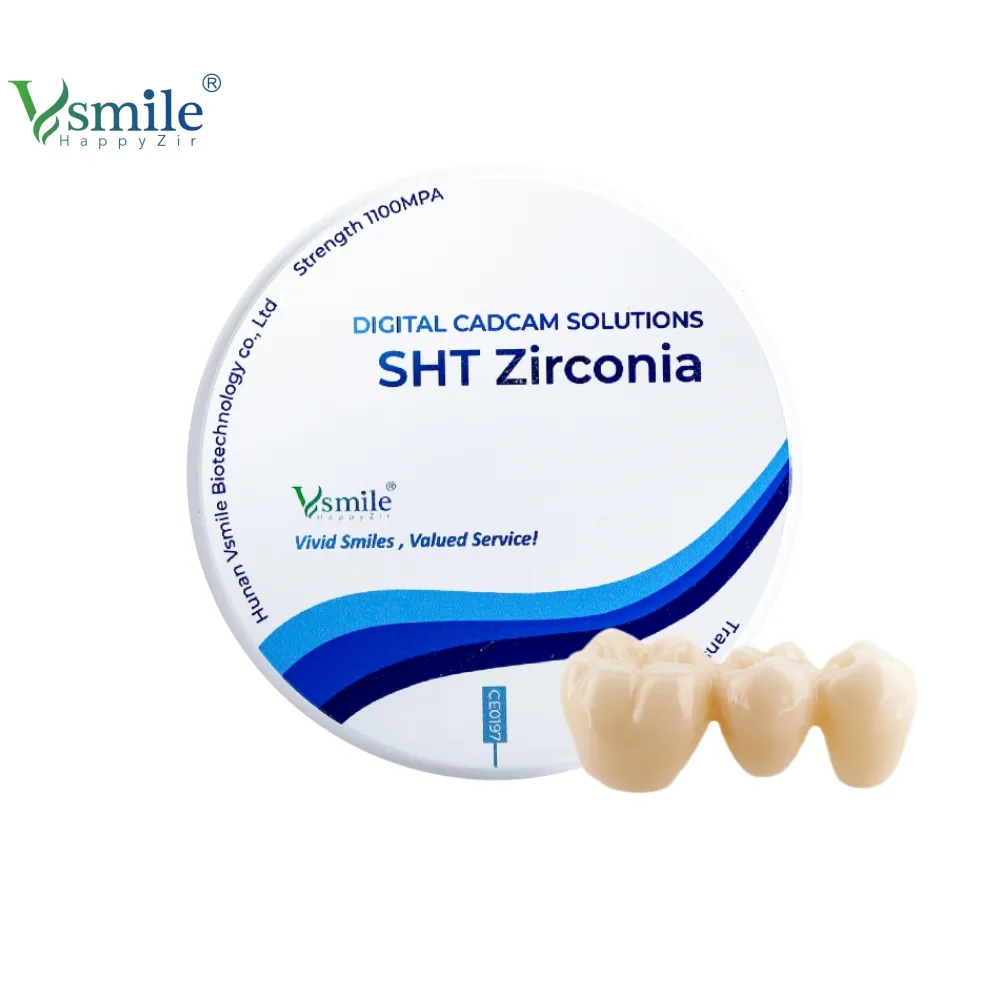
Best for:
Best for:
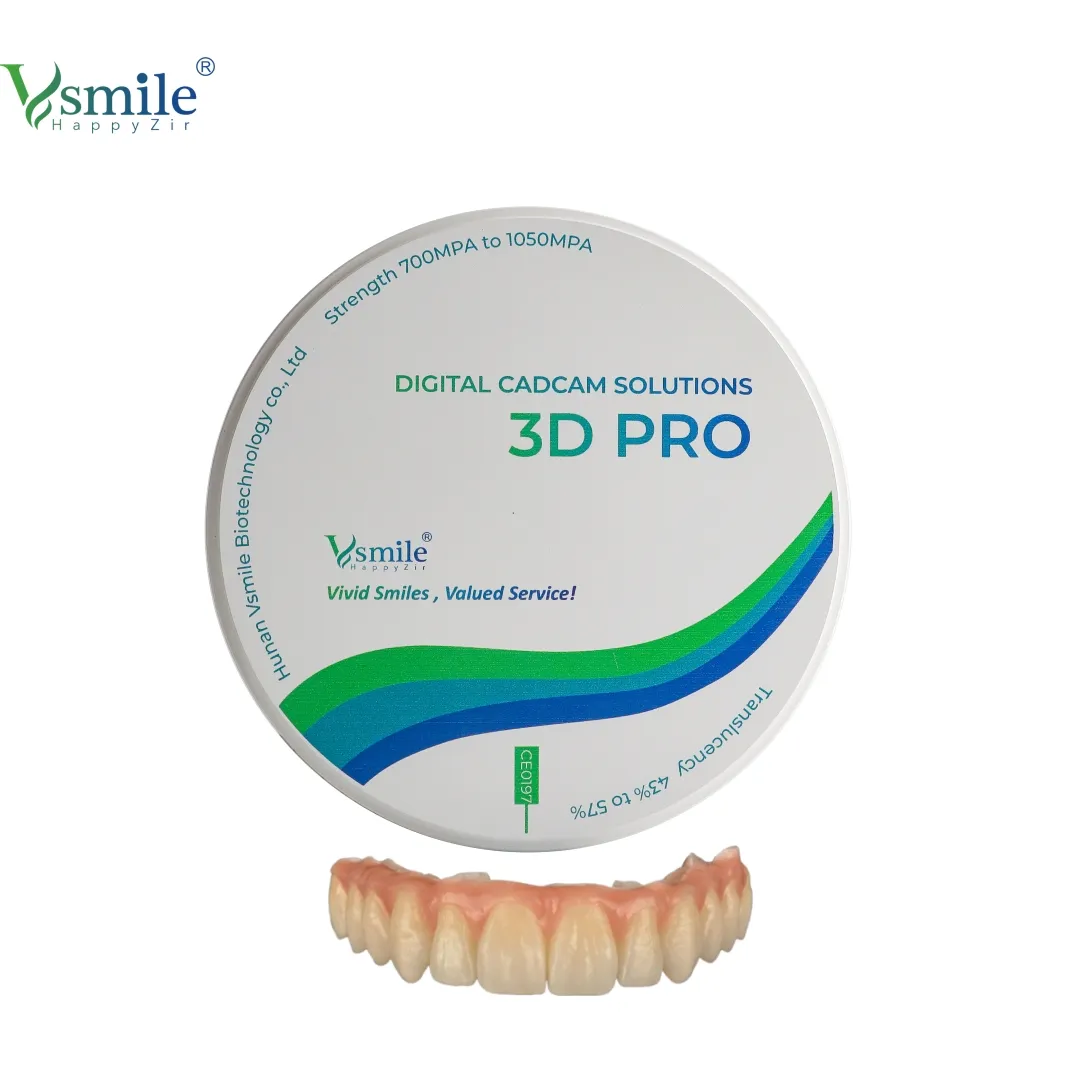
Recommended: multilayer zirconia with natural gradients, super translucent options, blocks mimicking enamel optical properties
Bruxism, heavy occlusion, implant-supported bridges, or long-span cases → use maximum durability blocks.
| Clinical Case | Recommended Zirconia Type |
|---|---|
| Front tooth crown | Super translucent multilayer |
| Veneer | High-translucent zirconia |
| Posterior crown | 1000–1200 MPa high strength zirconia |
| 3-unit bridge | Multilayer (ST/SHT) ≥1000 MPa |
| Long-span bridge | High-strength monolithic zirconia (≥1100 MPa) |
| Full-arch prostheses | Ultra-high strength (>1200 MPa) |
Vsmile guarantees consistent quality batch after batch, excellent balance of strength and aesthetics, trusted worldwide.
Explore Vsmile Zirconia Blocks
Picking the right Zirconia block ensures:
No matter the requirement—high translucency, strength, multilayer esthetics, or full-arch reliability—there’s a perfect Zirconia block for every case.

Vsmile is pleased to announce its participation in the 3rd Algerian Dental Expo (ADEX 2026), taking place from November 11 to 14, 2026, at the Palais des Expositions (SAFEX) in Algiers, Algeria.
At this year's exhibition, Vsmile will join its local distribution partner, WHITE TRADER, at Pavillon A. Together, the teams will connect with dental professionals and showcase dental materials, CAD/CAM solutions and practical applications for modern dental laboratory workflows.

This bundle combines the powerful VSF300 fast sintering furnace with 4 pcs of 3D Prism multilayer zirconia blocks, delivering speed, capacity, and consistent esthetics in one package.

Passive fit failure is rarely caused by a single factor. Instead, it is the result of error stacking across the entire digital and manufacturing workflow.

Fracture and microcracks are among the most critical failure modes in All-on-X (AOX) zirconia restorations.

Whether you're crafting A1 or D4, FreeTone White Zirconia Disc gives you total shade control with just one SKU — streamlining inventory and increasing productivity.

Voices from Vsmile Global Partners — Stories of Trust, Growth, and Smiles We Create Together.

Long-span and full-arch restorations represent some of the most complex and failure-prone procedures in digital dentistry. Challenges include connector fractures, marginal misfits, sintering deformation, and low clinical longevity. Labs and clinics face a high rate of remakes, increased cost, and pressure to maintain quality under tight delivery deadlines.
2025.5.22

Vsmile offers a complete, validated digital workflow — from scanning to final zirconia bridge — that helps labs and clinics deliver life-changing smiles faster, with greater confidence and repeatable quality.


Tel: +86-731-85682958
Fax: +86-731-85682958
WhatsApp: +8615084896166/+8618569525651
Email: [email protected]
Address:
Room 1202-1203, Building A4,Huanchuang Corporate Park,No.2450, Yuelu West Avenue, Changsha Hi-tech Development District, Changsha, China.



















































 EN
 fr
 ru
 nl
 uk
 fil
 lo
 ko
 it
 es
 el
 pt
 de
 th
 be
 sq
 tr
 ar
 vi
 pl